
































All Courses

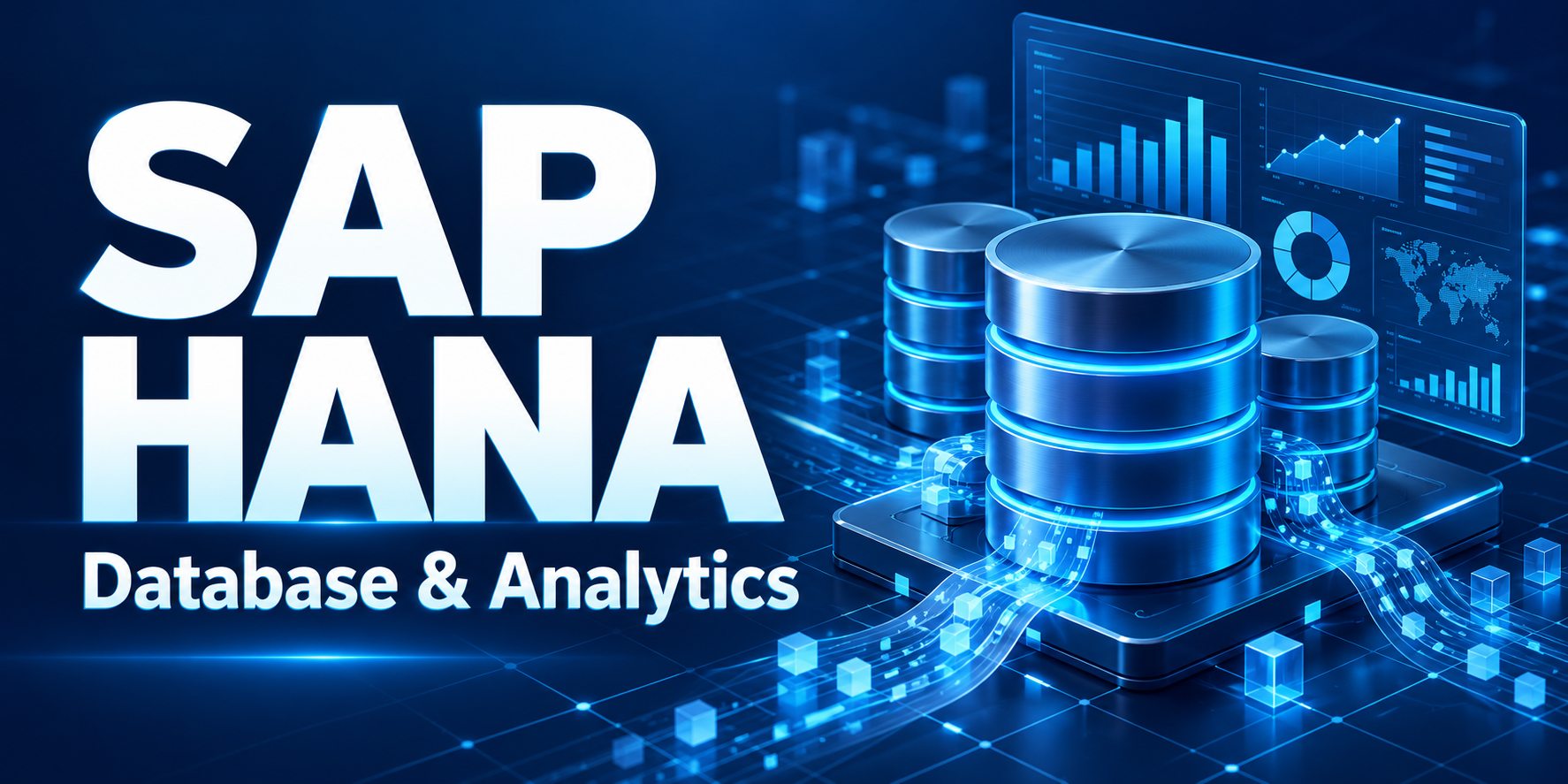
SAP S/4HANA FICO

SAP S/4HANA FICO


PROFESSIONAL CERTIFICATE

SAP S/4HANA FICO

A structured learning path covering SAP fundamentals, Financial Accounting, Controlling, taxation, reporting, integration and project implementation.

14 Modules FI + CO GST Reporting Project Work
Program Overview

From SAP fundamentals to an integrated FI/CO project

The curriculum progresses from understanding the SAP S/4HANA environment and organizational structure to configuring Financial Accounting, handling AP/AR, bank and asset accounting, GST, interest calculation, financial reporting, Controlling, FI-CO integration and project implementation.

Learning Journey

01
Foundation SAP, S/4HANA, Fiori, architecture & organization
→
02
Core FI Ledger, periods, documents, postings & balances
→
03
Subledgers AP, AR, bank & asset accounting
→
04
Advanced FI GST, interest, closing & reporting
→
05
CO + Project Cost control, profitability, integration & implementation

How the FI & CO learning areas connect

Financial Accounting
FI
G/L · AP · AR · Assets · Bank · Reporting
↔
Controlling
CO
Cost Centers · Orders · Profit Centers · Product Costing · CO-PA
Integration & real-time data flow are covered as a dedicated learning area.
Curriculum

14-module curriculum

MODULE 01

SAP Fundamentals

SAP environment, architecture and organizational setup.

  • SAP S/4HANA, evolution & features
  • Digital core & real-time processing
  • SAP login, Fiori & dashboards
  • 3-tier architecture, landscape & client-server
  • SAP GUI, Fiori & transaction codes
  • Company, company code, business area & structure
MODULE 02

Financial Accounting (FI)

Core FI configuration and organizational structure.

  • Company code & organizational hierarchy
  • Fiscal year & posting periods
  • Field status, document types & number ranges
  • Chart of accounts & retained earnings
  • Configuration assignments & financial structure

MODULE 03

Fiscal Year Variant

Financial period control and FI settings.

  • Fiscal year variants & posting periods
  • Maintain & assign fiscal year variants
  • Open posting period variants
  • Open & close posting periods
  • Advanced FI settings & number ranges
  • Employee & G/L tolerance groups
MODULE 04

Tolerance Groups & G/L

General Ledger accounting and posting controls.

  • Employee & G/L tolerance groups
  • Chart of accounts & account types
  • G/L postings & journal entries
  • Create G/L accounts & manage balances
  • Account groups, document types & retained earnings
MODULE 05

Accounting Entry Posting

Journal entry posting, reversal and validation.

  • Journal entries & posting concepts
  • Post entries & check ledger balance
  • Document types & posting keys
  • Posting rules & transactions
  • Reverse & validate postings
MODULE 06

Accounts Payable (AP)

Vendor lifecycle, invoice processing and payments.

  • Vendor lifecycle & invoice processing
  • Vendor master & account groups
  • Vendor number ranges & tolerance groups
  • Vendor invoices, balances & ledger checks
  • Payments & bank accounts
MODULE 07

Accounts Receivable (AR)

Customer lifecycle, billing and receipts.

  • Customer transactions, billing & receipts
  • Customer master & account groups
  • Customer number ranges & tolerance groups
  • Customer invoices, balances & ledger checks
  • Payment receipts & bank accounts
MODULE 08

Bank & Asset Accounting

Bank accounting and asset configuration.

  • Bank reconciliation & transactions
  • Bank entries & statement analysis
  • Asset Accounting & depreciation
  • Chart of depreciation & account determination
  • Asset classes, areas & depreciation keys
MODULE 09

GST Configuration

GST setup, tax calculation and account determination.

  • GST, CGST, SGST & IGST
  • Condition types & account keys
  • Tax procedure & country assignment
  • GST tax codes
  • G/L determination & GST entries
MODULE 10

Interest Calculation

Interest procedures, posting and results.

  • Interest concepts & procedures
  • Account balance interest calculation
  • Reference rates & time-based terms
  • Interest values & G/L accounts
  • Post documents & view results
MODULE 11

Advanced FI Reporting

Asset accounting, closing and financial reporting.

  • Asset lifecycle, depreciation & valuation
  • Asset master & transactions
  • Period-end closing & reconciliation
  • Balance sheet & P&L
  • Financial analysis & reporting tools
MODULE 12

Controlling (CO)

Cost control, allocation and profitability analysis.

  • Cost elements & cost flow
  • Cost centers & cost allocation
  • Internal orders & cost tracking
  • Profit centers & profitability
  • Product costing & pricing
  • CO-PA & revenue analysis
MODULE 13

Integration & Reporting

FI-CO integration, reporting and KPI analysis.

  • FI-CO integration & data flow
  • Real-time updates & transactions
  • Trace & validate integration
  • Standard & custom reports
  • KPIs & performance analysis
  • Profit center reporting
MODULE 14

Project Work

Plan, configure, test and report on an FI/CO project.

  • Requirements & project lifecycle
  • Scope & documentation
  • FI/CO configuration & scenarios
  • Testing & validation
  • Error fixing & final reports
Project Workflow

From requirement to final report

01
Requirements
Understand business requirements
→
02
Plan & Scope
Define scope and documentation
→
03
Configure
Configure FI/CO and scenarios
→
04
Test
Validate and fix errors
→
05
Report
Generate final reports
FI
Financial Accounting
G/L, AP, AR, assets, banks, posting, closing and financial reporting.
CO
Controlling
Cost centers, internal orders, profit centers, product costing and CO-PA.
TAX
GST Configuration
CGST, SGST, IGST, tax procedures, account keys and tax codes.
BI
Reporting & Analysis
Financial statements, KPIs, data analysis and reporting activities.
Program Outcome

A complete FI/CO learning journey

The curriculum combines SAP fundamentals, configuration concepts, accounting processes, reporting, Controlling, FI-CO integration and hands-on project activities into one structured path.

Module 1: SAP Fundamentals
  • Introduction to SAP S/4HANA
  • Explain SAP evolution and S/4HANA features
  • Describe digital core concept
  • Explain real-time processing
  • Log in to SAP system
  • Navigate SAP Fiori interface
  • Explore dashboards
  • SAP Architecture
  • Explain 3-tier architecture
  • Describe system landscape
  • Understand client-server concept
  • Identify system layers
  • Analyze system configuration
  • Explore system settings
  • SAP Navigation
  • Explain SAP GUI and Fiori navigation
  • Describe transaction codes
  • Understand menus and screens
  • Execute transactions
  • Customize layout
  • Navigate between modules
  • Company Management / Organizational Structure
  • Understand the concept of Company and Company Code,Understand Business Area,Learn organizational structure in SAP

  • Define Company,Create company code
  • Assign Company Code to Company
  • Create business areas
  • Configure structure

Module 2: Financial Accounting (FI)
  • Organizational Structure

  • Explain company code, business area
  • Describe organizational hierarchy
  • Understand configuration levels
  • Create company code
  • Assign business areas
  • Configure structure
  • Fiscal Year and Posting Period Configuration
  • Understand Fiscal Year Variant,Understand Posting Periods,earn how financial periods are controlled in SAP
  • Maintain Fiscal Year Variant,Assign Company Code to Fiscal Year Variant,Define Variants for Open Posting Periods,Open and Close Posting Periods,Assign Posting Period Variant to Company Code
  • Field Status Variant, Document Types & Number Ranges
  • Understand Field Status Variant,Understand Document Types,earn the concept of Document Number Ranges
  • Define Field Status Variants,Assign Company Code to Field Status Variant,Define Document Types,Define Document Number Ranges
  • Chart of Accounts Setup
  • Understand Chart of Accounts,Understand Retained Earnings Account
  • Define Chart of Accounts,Assign Company Code to Chart of Accounts,Define Retained Earnings Account

Module 3: Fiscal Year Variant in SAP HANA
  • Financial Accounting Global Settings
  • Understand Fiscal Year Variant,Understand Posting Periods,earn how financial periods are controlled in SAP
  • Maintain Fiscal Year Variant,Assign Company Code to Fiscal Year Variant,Define Variants for Open Posting Periods,Open and Close Posting Periods,Assign Posting Period Variant to Company Code
  • Advanced Financial Accounting Settings
  • Understand Field Status Variant,Understand Document Types,earn the concept of Document Number Ranges
  • Define Field Status Variants,Assign Company Code to Field Status Variant,Define Document Types,Define Document Number Ranges
  • Tolerance Group Configuration
  • Understand Tolerance Groups,Learn tolerance limits for employees and G/L accounts
  • Define Tolerance Group for Employees,Define Tolerance Group for G/L Accounts

Module 4: Tolerance Group in SAP Hana-Fico
  • Tolerance Group Configuration
  • Understand Tolerance Groups,Learn tolerance limits for employees and G/L accounts
  • Define Tolerance Group for Employees,Define Tolerance Group for G/L Accounts
  • General Ledger Accounting
  • Explain chart of accounts
  • Describe G/L postings
  • Understand account types
  • Create G/L accounts
  • Post journal entries
  • Manage account balances
  • G/L Account Configuration
  • Understand General Ledger,Understand Account Groups ,Understand Retained Earnings Account
  • Understand General
  • Define Account Groups,Create General Ledger Account,Define Document Types Define Chart of Accounts,Assign Company Code to Chart of Accounts,Define Retained Earnings Account

Module 5: Accounting Entry Posting Settings
  • Journal Entry Posting and Balance Checking
  • Understand Journal Entries,Learn accounting posting concepts
  • Post Accounting Entries,Check Ledger Balance
  • Posting Transactions
  • Explain document types and posting keys
  • Describe accounting entries
  • Understand posting rules
  • Post financial transactions
  • Reverse entries
  • Validate postings

Module 6: AP (Account Payable)
  • Accounts Payable (AP) Group
  • Explain vendor lifecycle
  • Describe invoice processing
  • Understand payment methods
  • Create vendor master
  • Process invoices
  • Execute payments
  • Vendor Payment Process
  • Understand Accounts Payable Process
  • Vendor Payment,Create Bank Account
  • Vendor Configuration and Master Data
  • Understand Vendor Concept,Learn vendor master data structure

  • Create Vendor Account Groups,Create Number Ranges for Vendor,Assign Number Ranges,Create Sundry Creditors Account,Define Vendor Tolerance Group,Create Vendor Master Data,Change Vendor Master Data,Display Vendor Master Data
  • Vendor Invoice Transactions
  • Understand Vendor Invoice Process,Learn accounts payable entry concepts
  • Create Vendor Document Type,Create Purchase Account,Vendor Invoice Entry,Check Vendor Balance,Check Ledger Balance,Vendor Balance Sheet

Module 7: AR (Account Receivable)
  • Accounts Receivable (AR) Groups
  • Explain customer transactions
  • Describe billing and receipts
  • Understand credit management
  • Create customer master
  • Record receipts
  • Manage outstanding balances
  • Customer Configuration and Master Data
  • Understand Customer Concept,Learn customer master data structure
  • Create Customer Account Groups,Create Customer Number Ranges,Assign Number Ranges,Define Customer Tolerance Groups,Create Customer Master,Change Customer Master ,Display Customer Master
  • Customer Invoice Transactions
  • Understand Customer Invoice Process,Learn accounts receivable entry concepts
  • Create Customer Document Type,Create Sales Account,Customer Invoice Entry,Check Customer Balance,Check Ledger Balance,Customer Balance Sheet
  • Customer Payment Receivable
  • Understand Accounts Receivable Process
  • Customer Payment Receipt,Create Bank Account

Module 8: Bank & Asset Accouting
  • Bank Accounting
  • Explain bank reconciliation
  • Describe cash management
  • Understand bank transactions
  • Perform bank reconciliation
  • Record bank entries
  • Analyze statements
  • Asset Accounting Setup
  • Understand Asset Accounting,Learn Depreciation Concepts
  • Create Chart of Depreciation,Assign Chart of Depreciation to Company Code,Specify Account Determination,Create Screen Layout Rules,Maintain Asset Number Ranges
  • Asset Master Configuration
  • Understand Asset Classes,Learn Depreciation Areas and Keys
  • Define Asset Classes,Determine Depreciation Area,Assign General Ledger Accounts,Define Screen Layout for Asset Master Data,Maintain Depreciation Key

Module 9: GST Configuration
  • GST Setup in SAP
  • Understand GST concept,Learn Types of GST (CGST, SGST, IGST)
  • Define Condition Types,Define Account Keys,Define Tax Calculation Procedure,Assign Country to Tax Procedure,Create GST Tax Codes
  • GST Accounting & Account Determination
  • Understand GST Account Determination
  • Create G/L Accounts,Assign G/L Accounts to Account Keys,GST Vendor Entry,GST Customer Entry

Module 10: Interest Calculation Configuration
  • Interest Configuration in SAP
  • Understand Interest Calculation Concepts
  • Define Interest Calculation Procedure,Prepare Account Balance Interest Calculation,Define Reference Interest Rates,Define Time-Based Terms,Enter Interest Values
  • Interest Posting and Results
  • Understand interest calculation results
  • Create G/L Accounts,Prepare G/L Account Balance Interest Calculation,Post G/L Documents,Display Interest Calculation Result

Module 11: Sap HANA - Advanced Financial Accounting (FI) Reporting
  • Asset Accounting
  • Explain asset lifecycle
  • Describe depreciation methods
  • Understand asset valuation
  • Create asset master
  • Post asset transactions
  • Calculate depreciation
  • Financial Closing
  • Explain period-end closing
  • Describe adjustments
  • Understand reconciliation
  • Execute closing activities
  • Post adjustments
  • Validate reports
  • Financial Reporting
  • Explain financial statements
  • Describe reporting tools
  • Understand data analysis
  • Generate balance sheet
  • Prepare P&L reports
  • Analyze financial data

Module 12: Controlling (CO)
  • Introduction to Controlling
  • Explain cost accounting concepts
  • Describe cost elements
  • Understand CO structure

  • Identify cost elements
  • Classify costs
  • Analyze cost flow
  • Cost Center Accounting
  • Explain cost allocation
  • Describe cost centers
  • Understand budgeting
  • Create cost centers
  • Allocate costs
  • Monitor expenses
  • Internal Orders
  • Explain order tracking
  • Describe cost control
  • Understand budgeting process
  • Create internal orders
  • Track costs
  • Analyze order data
  • Profit Center Accounting
  • Explain profit center concept
  • Describe revenue tracking
  • Understand performance analysis
  • Create profit centers
  • Analyze profitability
  • Generate reports
  • Product Costing
  • Explain costing methods
  • Describe cost components
  • Understand pricing
  • Calculate product cost
  • Analyze cost structure
  • Compare pricing

  • Profitability Analysis (CO-PA)
  • Explain profitability analysis
  • Describe market segmentation
  • Understand revenue analysis
  • Generate CO-PA reports
  • Interpret results

Module 13: Integration & Reporting
  • FI-CO Integration
  • Explain integration process
  • Describe data flow
  • Understand real-time updates
  • Perform integrated transactions
  • Trace data flow
  • Validate integration
  • SAP Reporting Tools
  • Explain reporting types
  • Describe standard/custom reports
  • Understand KPIs
  • Generate reports
  • Customize layouts
  • Analyze KPIs
  • Profit Center Accounting
  • Explain profit center concept
  • Describe revenue tracking
  • Understand performance analysis
  • Create profit centers
  • Analyze profitability

Module 14: Project Work
  • Project Planning
  • Explain business requirements
  • Describe project lifecycle
  • Understand documentation
  • Prepare project plan
  • Define scope
  • Create documentation
  • Configuration & Implementation
  • Explain system configuration
  • Describe implementation steps
  • Understand customization
  • Configure FI/CO modules
  • Implement scenarios
  • Test configurations
  • Testing & Reporting
  • Explain testing methods
  • Describe validation
  • Describe reporting accuracy
  • Perform testing
  • Fix errors
  • Generate final reports

Send Me Message

Certificate and Accreditation

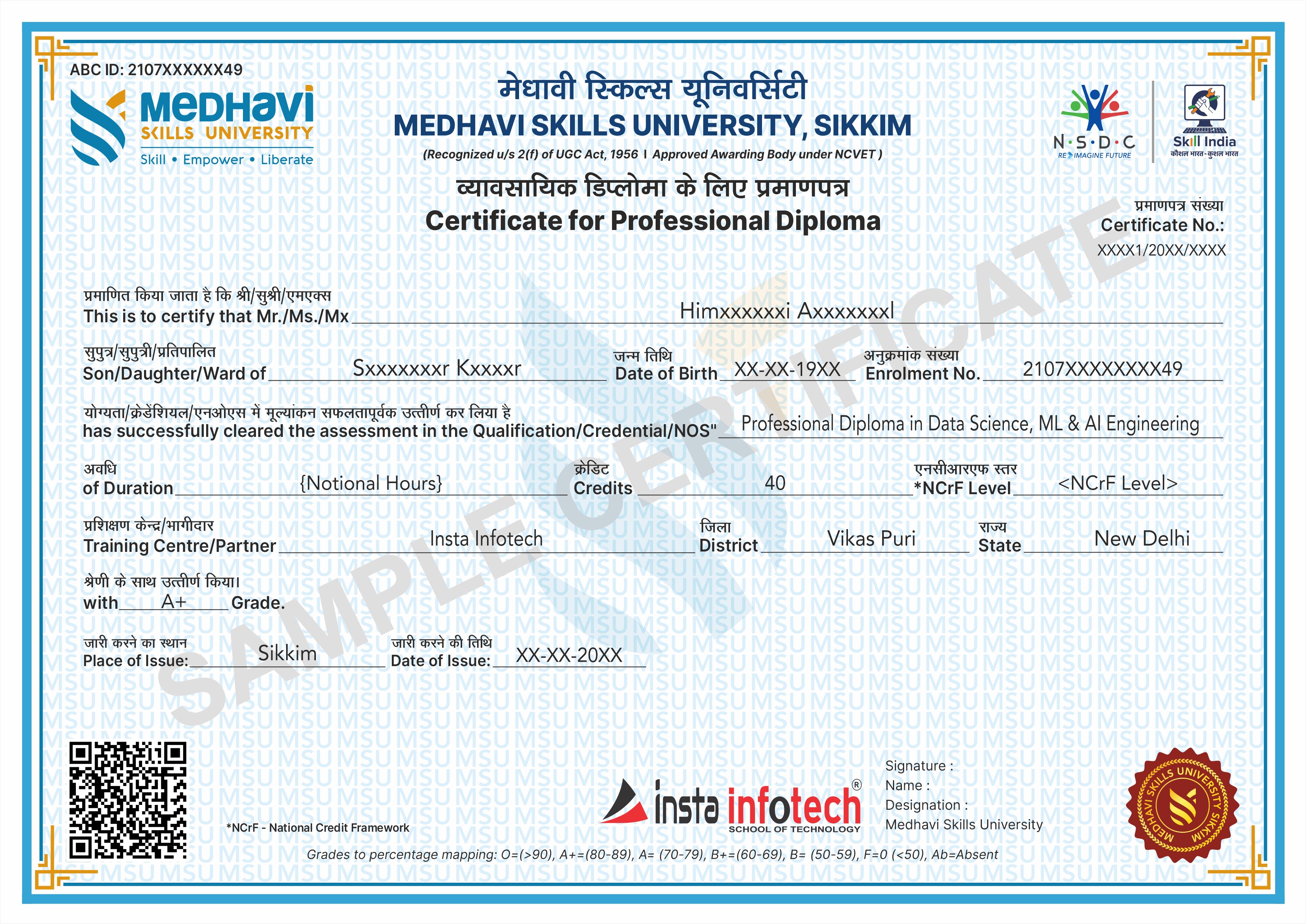
Accreditation Certificate

Professional Diploma Certificate

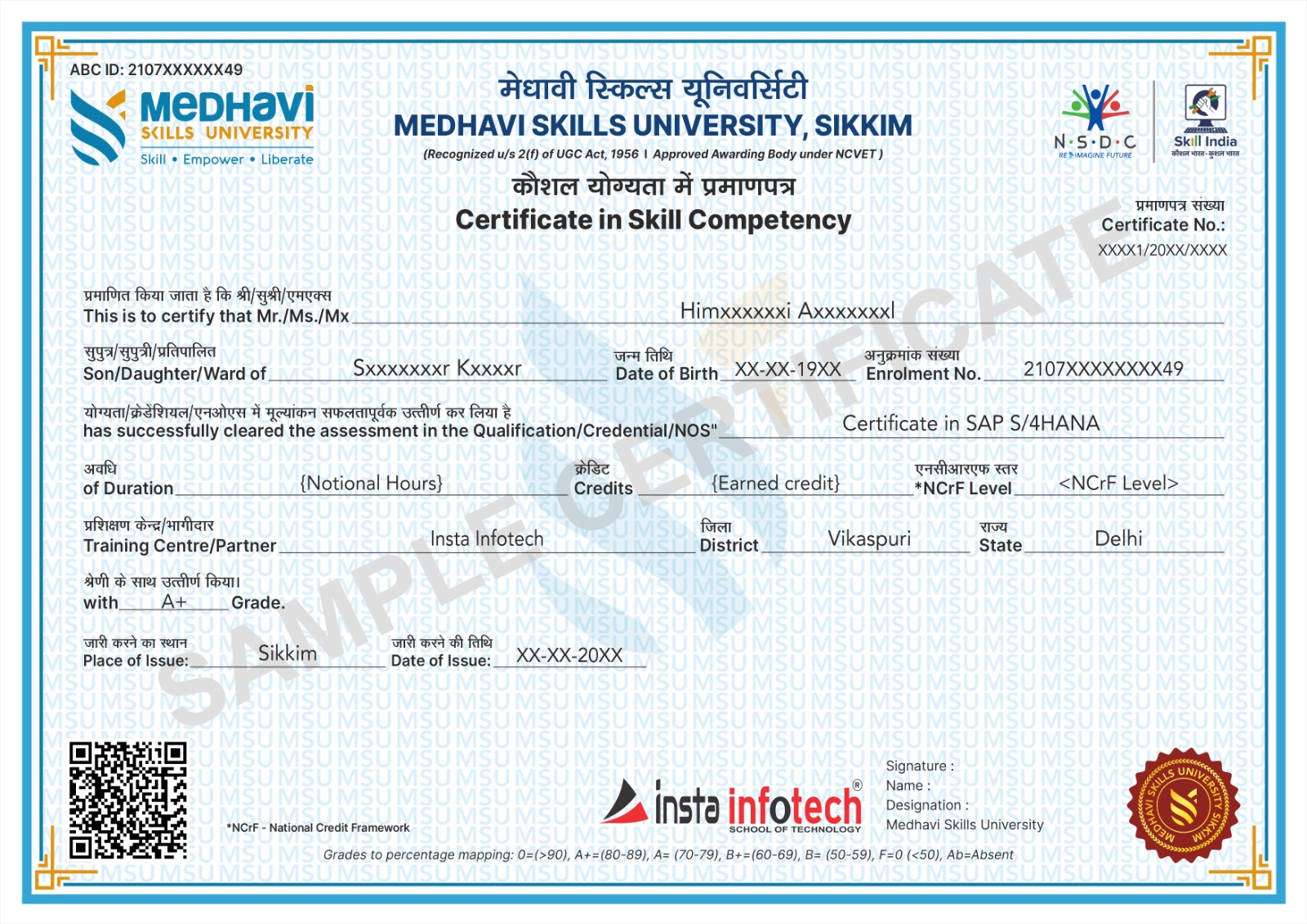
Skills Certificate

Brand Registration

Trust & Validation

UGC-Recognized Skilled Qualifications for the Modern Global Workforce

University Certification

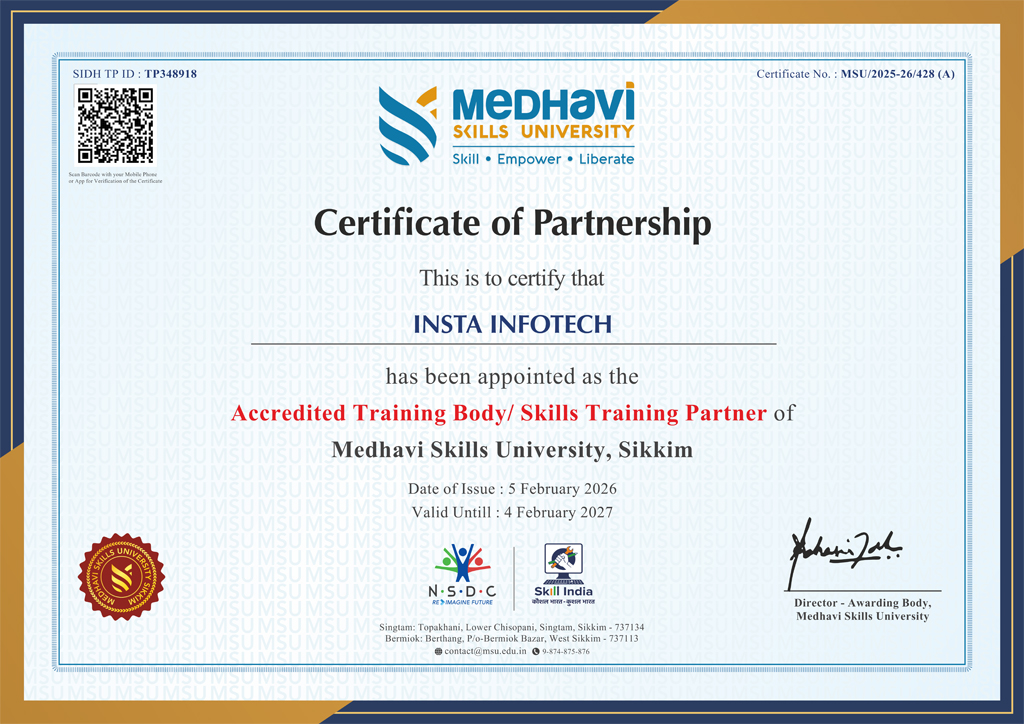
Earn industry-relevant Certificates and Diplomas awarded by Medhavi Skills University, a UGC-recognized University. Insta Infotech is Approved Training Partner of Medhavi Skills University, ensuring quality education and credible certification.

Certificate Verification

All Certificates and Diplomas are digitally verifiable through Government of India platforms, including Skill India Digital Hub (MSDE), ABC.gov.in (Ministry of Education), and DigiLocker, ensuring authenticity and nationwide recognition.

Credit-Based Course (NCrF)

Our courses are aligned with the National Credit Framework (NCrF) under the National Education Policy (NEP) 2020. Learners earn academic credits that strengthen their skill-based education profile and can be seamlessly transferred toward higher education pathways.

Global Recognition
Global Recognition

NCrF-aligned skill credits are recognized across the UK, EU, and Australian education systems. Through MSU’s global partnerships, learners benefit from dual certification opportunities and accelerated pathways to international degree programs.

Skill India Mission
Skill India Mission

Insta Infotech empowers learners with future-ready skills. Backed by the Skill India Mission and our academic partnership with Medhavi Skills University, we bridge the gap between education and employment through practical, hands-on learning and nationally recognized certifications.

Placement Support
Placement Support

Quality Skill Education — this is not merely a certificate of attendance, but a verified academic credential that enhances credibility and opens opportunities across MNCs, embassies, and government sectors.

Specializations

Skilled, Qualification, Certification

Course Credibility

Course Credibility

Our programs are certified by a recognized university, ensuring legal authenticity, academic validity, and strong professional acceptance. This means your qualification carries real value for employment, career advancement, and higher education.

Employability

Employability

Our programs combine practical training, real-world projects, and industry-relevant skills to prepare students for immediate employment. we ensure learners confidently transition from education to professional careers.

Global Standards

Global Standards

Our programs follow internationally aligned curricula and current industry requirements, ensuring learners gain globally relevant knowledge, practical competencies, and professional practices. This prepares students to adapt, compete, and work confidently.

National Alignment (Skill India)

National Alignment (Skill India)

Aligned with the Skill India Mission, we transform vocational training into a nationally recognized qualification, enabling our students to become part of India’s formal skilled workforce.

Academic Mobility (Credit-Based)

Academic Mobility (Credit-Based)

Through the National Credit Framework (NCrF), our courses are not merely extra-curricular; they are credit-earning modules that contribute directly toward your formal higher education pathway.

NEP 2020 Integration

NEP 2020 Integration

Aligned with the National Education Policy 2020, we transform traditional IT education into a multidisciplinary, skilled-based vocational pathway that enables students to earn formal academic credits.

Our Blogs

Latest Blog Updates

SEO Training Having Great Future Insta Infotech

Internet marketing is now flourishing throughout the world. The widespread use of internet has increased the market of products and services online. This has again increased the demand of online marketers.

Read More

Skillful Website with Developing Standards

If you are planning to choose a career in IT, here you find the career scope in joining Web designing course in Delhi.

Read More

Connect IT Training Peaks

Insta infotech “Software And IT Training Institute” makes an instrument to meet the twin challenges of continuous improvement in IT demand for change

Read More

Pick up High-Level Programming Language Python

Python is a High-level programming language. Python programming can be used for Data Science, Network Programming Web Development, etc. Our training covers python as object Oriented, Python as Data structure, GUI, Database connection with Python. Python is famous language as machine learning, course focus on  learning from beginning to advanced level.

Read More

Specialize in RHCSA certified Professional

Insta Infotech certified candidates with RHCSA practice course with 200+ RHEL7 real-world problem scenarios covering all the exam. An RHCSA® certification is earned when an IT professional try the core system administration skills required in Red Hat Enterprise Linux environments. To become an RHCSA certified, you need to pass the EX200 exam. Only this course has the up to date simulated tests questions, where all questions are carefully scrutinized by real Linux certified professionals.

Read More

Start Your Career As SEO Expert

Search Engine Optimization is one of the essential method you can make use of, attaining more higher rankings but also for running effective Search Engine Optimization campaigns.Today building a career in website development standards is the prime focus on all SEO methods, and also if it's not appropriately implemented. Professional and practical SEO courses in Delhi works on Live Projects that can provide you long-term gains in a shorter period.

Read More

Transform Your Career with Insta InfoTech - Premier IT Training Institute

Join Insta InfoTech for cutting-edge IT training programs designed to boost your skills and career prospects. Offering expert-led Courses in Software Development, Data Science, Cybersecurity, and more.

00+

Trained Students

00+

Years of Experience

00+

Countries Represented

00x7

Support

Insta Infotech

What We Offer

At Insta Infotech, we specialize in a wide array of courses across domains like:

Programming Languages: Java, Python, C++, .NET, and more. Data Science & Analytics: Machine Learning, AI, Big Data. Cloud Computing & DevOps: AWS, Azure, Docker, Kubernetes. Cybersecurity: Ethical Hacking, Network Security. Digital Marketing: SEO, Social Media, Content Marketing. Database Management: SQL, PL/SQL, MongoDB, Oracle.
Enquire Now
Our learners work at