All Courses

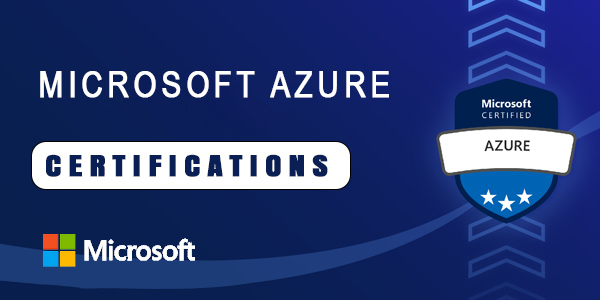
Microsoft Azure Certifications at Insta InfoTech - Boost Your Cloud Career

Insta Infotech® offers structured Microsoft Azure Certification Training designed to help learners build practical cloud computing skills. The program covers core Azure services including virtual machines, storage systems, networking, identity management, and cloud security.

Through guided labs and real-world deployment exercises, students learn how to create and manage cloud infrastructure, configure networking, deploy applications, and monitor cloud resources using the Microsoft Azure platform.

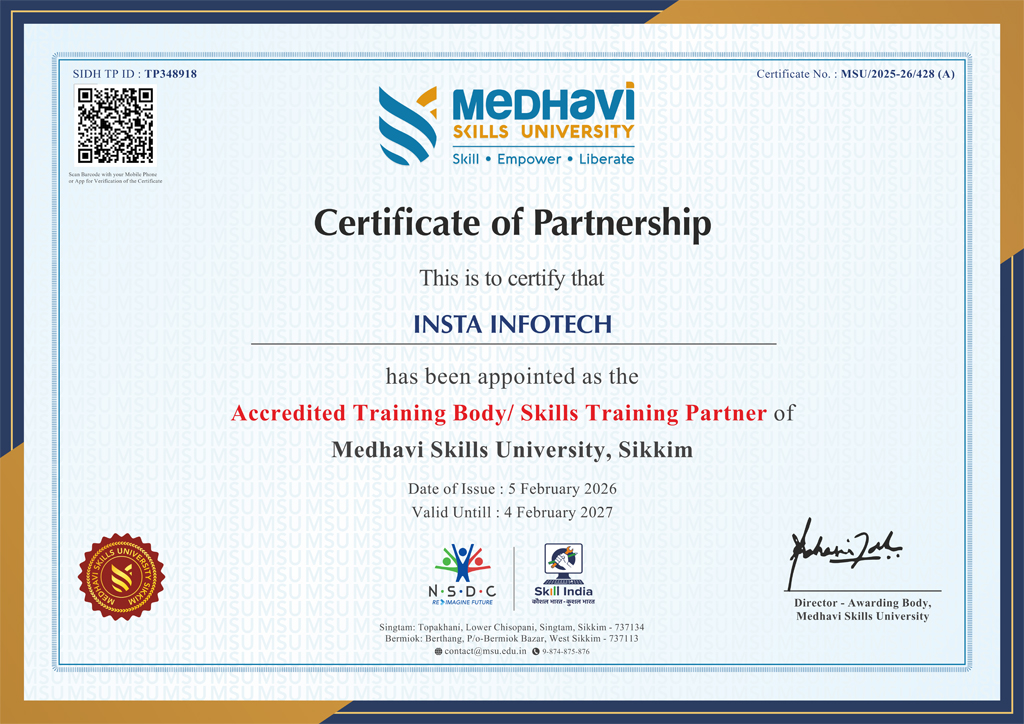
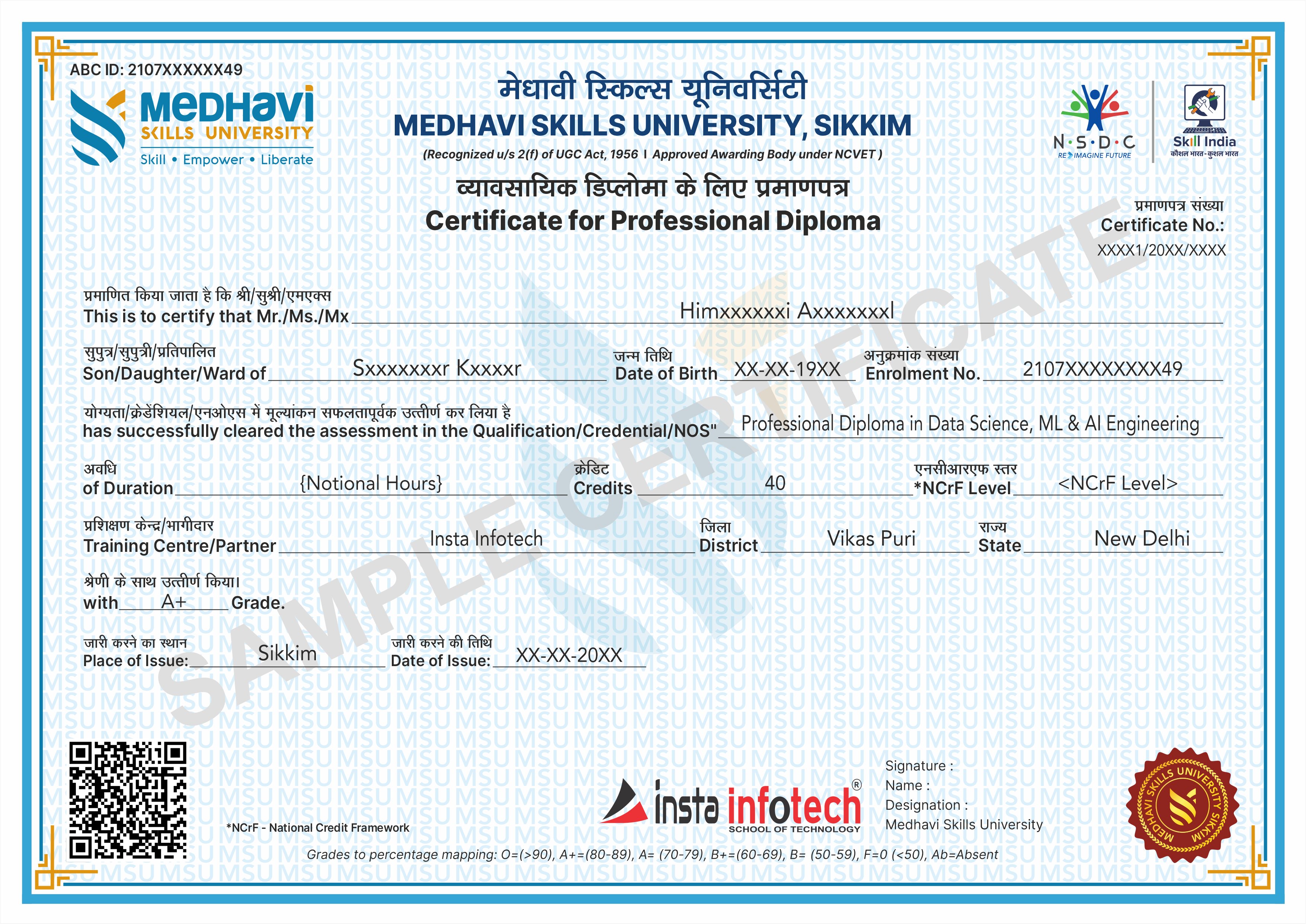
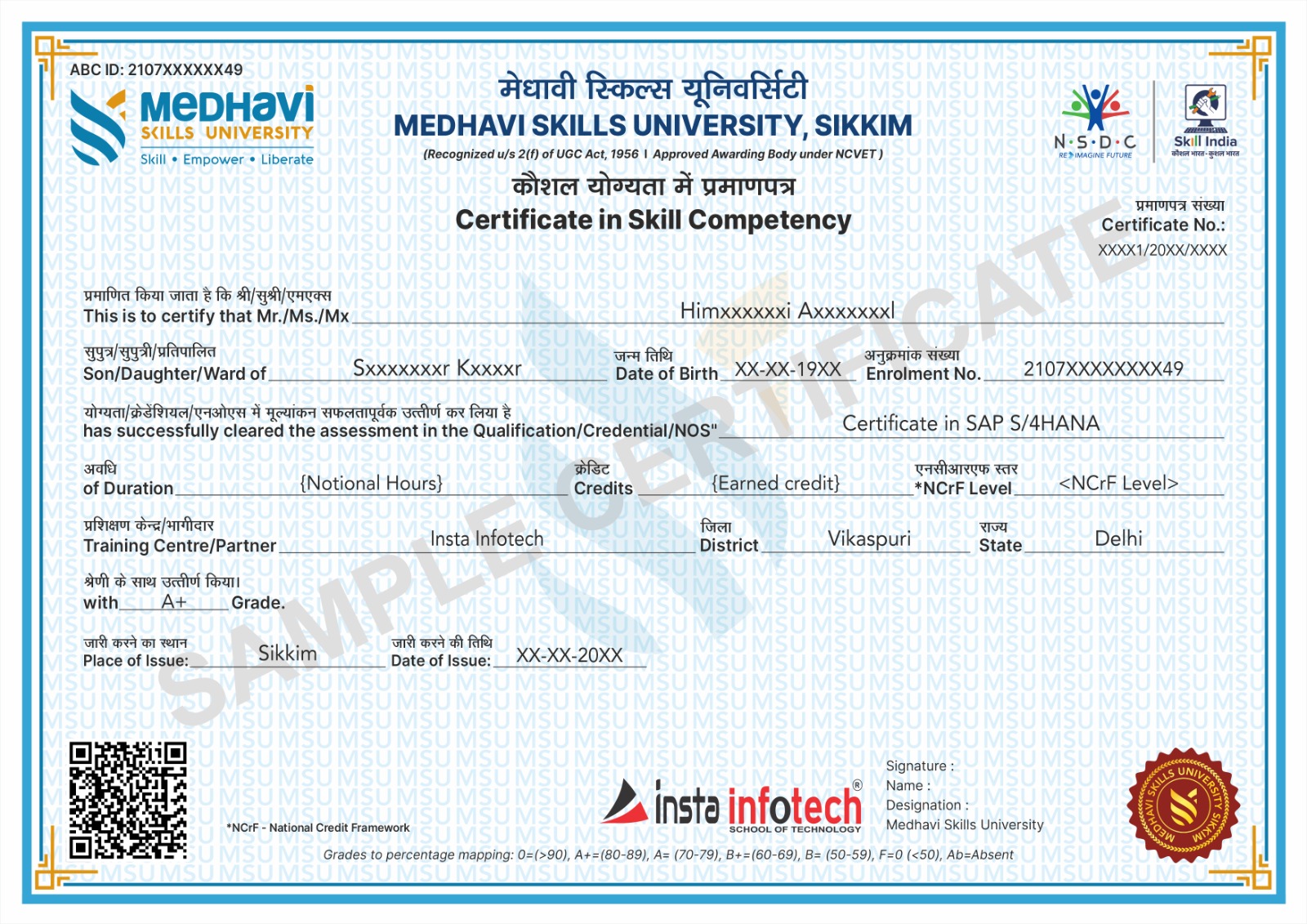
Eligible programs provide a university-recognised Skills Certificate or Diploma delivered in partnership with Medhavi Skills University. These programs earn NCrF (National Credit Framework) credits, which may contribute toward higher education progression while strengthening professional credibility.


Microsoft Azure Certifications

Cloud computing has become a core part of modern IT infrastructure, and Microsoft Azure is one of the leading enterprise cloud platforms. Insta Infotech® offers structured Microsoft Azure Certification Training designed to help learners understand cloud architecture, infrastructure management, and application deployment using the Azure platform.

Through expert-led instruction and hands-on labs, students gain practical experience working with Azure services such as virtual machines, storage, networking, identity management, and security. The program is suitable for beginners entering cloud computing as well as IT professionals expanding their cloud architecture and administration skills.

Why Learn Microsoft Azure?
  • Growing Industry Demand: Organizations worldwide are adopting cloud platforms such as Microsoft Azure.
  • Career Opportunities: Azure expertise supports roles such as Cloud Administrator, Azure Developer, and Cloud Solutions Architect.
  • Enterprise Cloud Platform: Azure provides services for computing, networking, databases, AI, and security.
  • Practical Cloud Skills: Training focuses on real-world cloud deployment and management workflows.
  • Hands-On Labs: Practice configuring infrastructure, networking, and application deployment in Azure environments.
Microsoft Azure Certification Courses at Insta Infotech®
  • Microsoft Certified: Azure Fundamentals (AZ-900)
    Introduction to cloud computing concepts, Azure services, pricing, and security fundamentals.
  • Microsoft Certified: Azure Administrator Associate (AZ-104)
    Manage Azure resources including virtual machines, networking, storage, and identity management.
  • Microsoft Certified: Azure Developer Associate (AZ-204)
    Build, test, and deploy cloud-native applications using Azure development tools and services.
  • Microsoft Certified: Azure Solutions Architect Expert (AZ-305)
    Design scalable, secure, and reliable cloud architectures using Azure infrastructure services.
  • Microsoft Certified: Azure Security Engineer Associate (AZ-500)
    Implement identity protection, threat protection, and secure cloud infrastructure on Azure.
Certification & Academic Recognition

Eligible programs provide a university-recognised Skills Certificate or Diploma delivered in partnership with Medhavi Skills University. These programs earn NCrF (National Credit Framework) credits, which may contribute toward higher education progression while strengthening professional credibility.

The Azure training program at Insta Infotech® focuses on practical cloud architecture, infrastructure deployment, and hands-on cloud administration aligned with modern enterprise cloud practices.

Module 1: Introduction to Cloud Computing
  • What is Cloud Computing?
  • Benefits of Cloud Computing
  • Cloud Deployment Models (Public, Private, Hybrid)
  • Cloud Service Models (IaaS, PaaS, SaaS)
Module 2: Core Azure Architectural Components
  • Overview of Microsoft Azure
  • Azure Global Infrastructure
  • Azure Regions and Availability Zones
  • Azure Resource Manager (ARM)
Module 3: Azure Compute Services
  • Azure Virtual Machines (VMs)
  • Azure App Services
  • Azure Kubernetes Service (AKS)
  • Azure Functions (Serverless Computing)
Module 4: Azure Networking Services
  • Azure Virtual Network (VNet)
  • Azure Load Balancer
  • Azure Application Gateway
  • Azure DNS and Traffic Manager
Module 5: Azure Storage Services
  • Azure Blob Storage
  • Azure File Storage
  • Azure Disk Storage
  • Azure Storage Tiers and Redundancy
Module 6: Azure Identity, Security, and Compliance
  • Azure Active Directory (Azure AD)
  • Multi-Factor Authentication (MFA)
  • Role-Based Access Control (RBAC)
  • Azure Security Center and Defender
Module 7: Azure Management and Governance
  • Azure Monitor and Log Analytics
  • Azure Policy and Compliance
  • Azure Blueprints
  • Azure Cost Management and Pricing
Module 8: Azure Pricing and Support
  • Azure Pricing Calculator
  • Azure Free Tier and Cost Optimization
  • Azure Support Plans
  • Service Level Agreements (SLAs)
Module 9: Azure Solutions and Use Cases
  • Cloud Migration Strategies
  • Hybrid Cloud with Azure
  • Business Continuity and Disaster Recovery
  • Industry-Specific Use Cases
Module 10: Exam Preparation and Practice
  • Overview of AZ-900 Exam
  • Study Resources and Materials
  • Practice Questions and Mock Tests
  • Final Review and Summary

Module 1: Introduction to Azure Administration
  • Overview of Microsoft Azure
  • Azure Global Infrastructure
  • Azure Resource Manager (ARM) Overview
  • Azure Portal and CLI
Module 2: Managing Azure Subscriptions and Resources
  • Managing Azure Subscriptions
  • Creating and Managing Resource Groups
  • Implementing Azure Policies
  • Monitoring and Managing Costs
Module 3: Implementing and Managing Storage
  • Azure Storage Account Overview
  • Blob Storage and Azure Files
  • Storage Security and Access Control
  • Implementing Azure Backup
Module 4: Deploying and Managing Virtual Machines (VMs)
  • Creating and Configuring Virtual Machines
  • Managing VM Sizes and Scaling
  • Configuring High Availability and Disaster Recovery
  • Monitoring VM Performance
Module 5: Configuring and Managing Virtual Networks
  • Azure Virtual Network (VNet) Overview
  • Implementing Subnets and Network Security Groups (NSGs)
  • Configuring Peering and VNet-to-VNet Connections
  • Configuring Azure DNS and Custom Domain Names
Module 6: Managing Identities and Access
  • Azure Active Directory (Azure AD) Overview
  • Implementing Role-Based Access Control (RBAC)
  • Multi-Factor Authentication (MFA) and Conditional Access
  • Managing Azure AD Identities and Users
Module 7: Managing Security and Compliance
  • Azure Security Center Overview
  • Implementing Azure Defender
  • Managing Azure Firewall and DDoS Protection
  • Security Best Practices and Compliance
Module 8: Implementing and Managing Hybrid Identities
  • Introduction to Hybrid Identity
  • Integrating Azure AD with On-Premises AD
  • Azure AD Connect and Synchronization
  • Implementing Single Sign-On (SSO)
Module 9: Monitoring and Troubleshooting Azure Resources
  • Azure Monitor and Log Analytics
  • Configuring Alerts and Notifications
  • Monitoring and Troubleshooting Network Issues
  • Using Azure Service Health
Module 10: Automating Azure Tasks
  • Using Azure Automation
  • Implementing Azure PowerShell and CLI
  • Managing Infrastructure with ARM Templates
  • Using Azure Logic Apps and Functions
Module 11: Managing Azure Backup and Recovery
  • Implementing Azure Site Recovery (ASR)
  • Azure Backup Solutions and Policies
  • Restoring Data and Disaster Recovery Strategies
  • Configuring Azure Files and Blob Versioning
Module 12: Exam Preparation and Practice
  • AZ-104 Exam Overview and Format
  • Practice Questions and Mock Tests
  • Real-World Case Studies and Scenarios
  • Final Review and Study Tips

Module 1: Introduction to Azure Architecture
  • Overview of Azure Cloud Computing
  • Azure Global Infrastructure (Regions, Availability Zones)
  • Azure Resource Manager (ARM) and Resource Groups
  • Designing Azure Governance and Policies
Module 2: Designing Identity and Access Management
  • Azure Active Directory (Azure AD) Overview
  • Identity and Access Management Best Practices
  • Multi-Factor Authentication (MFA) and Conditional Access
  • Azure AD B2B and B2C Authentication
  • Role-Based Access Control (RBAC) Implementation
Module 3: Designing Network Infrastructure
  • Azure Virtual Networks (VNet) and Subnets
  • Hybrid Networking with VPN Gateway and ExpressRoute
  • Network Security Groups (NSG) and Firewalls
  • Application Gateway and Azure Front Door
  • Azure DNS, Load Balancing, and Traffic Manager
Module 4: Designing Compute Solutions
  • Azure Virtual Machines (VMs) and Scale Sets
  • Azure Kubernetes Service (AKS) and Containers
  • Azure App Services and Function Apps
  • Serverless Computing with Azure Functions
Module 5: Designing Data Storage Solutions
  • Azure Storage Accounts and Storage Types
  • Blob Storage, File Storage, and Disk Storage
  • Azure SQL Database and Managed Instances
  • Cosmos DB and NoSQL Solutions
  • Data Encryption and Security Best Practices
Module 6: Designing Business Continuity and Disaster Recovery
  • Azure Backup and Restore Strategies
  • Azure Site Recovery (ASR) Implementation
  • High Availability and Fault Tolerance
  • Disaster Recovery Planning in Azure
Module 7: Designing Security and Compliance Solutions
  • Azure Security Center and Defender
  • Data Protection and Encryption Strategies
  • Security Best Practices and Zero Trust Model
  • Compliance and Regulatory Frameworks
Module 8: Designing Azure Monitoring and Automation
  • Azure Monitor and Application Insights
  • Log Analytics and Azure Sentinel
  • Automation with Azure Logic Apps and Power Automate
  • Azure DevOps and Infrastructure as Code (IaC)
Module 9: Designing Cost Optimization Strategies
  • Azure Pricing and Cost Management
  • Optimizing Workloads for Cost Efficiency
  • Azure Reservations and Spot Instances
  • Scaling and Performance Optimization
Module 10: Exam Preparation and Case Studies
  • Exam Structure and Study Plan
  • Practice Questions and Mock Exams
  • Real-World Scenario-Based Case Studies
  • Final Review and Tips for Success

Module 1: Introduction to Azure Development
  • Overview of Cloud Computing
  • Introduction to Microsoft Azure
  • Azure Resource Manager (ARM) and Azure CLI
  • Azure SDKs and Developer Tools
Module 2: Developing Azure Compute Solutions
  • Azure Virtual Machines
  • Azure App Services (Web Apps, API Apps, Mobile Apps)
  • Azure Functions (Serverless Computing)
  • Azure Kubernetes Service (AKS)
  • Azure Container Apps
Module 3: Implementing Azure Security
  • Authentication and Authorization
  • Azure Active Directory (AAD) and Role-Based Access Control (RBAC)
  • Secure App Development and Key Vault
  • Managed Identities and Security Best Practices
Module 4: Developing for Azure Storage
  • Azure Blob Storage
  • Azure Table Storage
  • Azure Queue Storage
  • Azure Cosmos DB (NoSQL Database)
  • Working with Azure SQL Database
Module 5: Implementing Azure Security and Monitoring
  • Azure Application Insights
  • Azure Monitor and Log Analytics
  • Azure Security Center
  • Performance Tuning and Troubleshooting
Module 6: Integrating Azure Services
  • Azure Logic Apps
  • Azure Event Grid
  • Azure Service Bus
  • Azure API Management
  • Azure Event Hubs and IoT Hub
Module 7: Implementing Azure Identity Management
  • Azure AD B2C and B2B
  • OAuth 2.0 and OpenID Connect
  • Multi-Factor Authentication (MFA)
  • Integrating with External Identity Providers
Module 8: Deploying and Managing Applications
  • Azure DevOps and CI/CD Pipelines
  • Infrastructure as Code (IaC) with ARM Templates
  • Deploying Applications with GitHub Actions
  • Managing App Configurations and Feature Flags
Module 9: Azure Messaging and Event Processing
  • Azure Event Hubs and Event Grid
  • Azure Service Bus Messaging
  • Azure Queue Storage and Durable Functions
  • Asynchronous Processing Patterns
Module 10: Optimizing Azure Solutions
  • Performance Optimization Techniques
  • Cost Management and Optimization
  • Scalability Best Practices
  • Azure Well-Architected Framework
Module 11: Exam Preparation and Practice
  • Exam Overview and Objectives
  • Practice Questions and Mock Exams
  • Case Studies and Real-World Scenarios
  • Final Review and Study Tips

Module 1: Introduction to DevOps
  • Understanding DevOps Principles
  • Benefits of DevOps
  • DevOps Culture and Practices
  • DevOps on Azure Overview
Module 2: Azure DevOps Services
  • Overview of Azure DevOps
  • Azure Repos - Version Control
  • Azure Pipelines - CI/CD
  • Azure Artifacts - Package Management
  • Azure Test Plans - Automated Testing
Module 3: Implementing Continuous Integration (CI)
  • Understanding Continuous Integration
  • Configuring Azure Pipelines for CI
  • Using GitHub Actions with Azure DevOps
  • Build Automation and Code Quality
Module 4: Implementing Continuous Delivery (CD)
  • Introduction to Continuous Deployment
  • Release Pipelines in Azure DevOps
  • Blue-Green and Canary Deployments
  • Infrastructure as Code (IaC) with ARM and Terraform
Module 5: Infrastructure as Code (IaC) and Configuration Management
  • Infrastructure as Code (IaC) Concepts
  • Using Azure Resource Manager (ARM) Templates
  • Terraform for Azure Deployment
  • Azure Automation and Desired State Configuration (DSC)
Module 6: Implementing Security and Compliance
  • Security in DevOps
  • Azure Security Center and Compliance
  • Identity and Access Management with Azure AD
  • Role-Based Access Control (RBAC) in Azure DevOps
Module 7: Monitoring and Feedback
  • Monitoring Applications with Azure Monitor
  • Log Analytics and Application Insights
  • Setting up Alerts and Notifications
  • Continuous Feedback and Improvement
Module 8: Managing Source Control
  • Version Control Strategies
  • Git Workflows and Branching Strategies
  • Code Reviews and Pull Requests
  • Handling Merge Conflicts
Module 9: Implementing Dependency Management
  • Managing Dependencies in Azure Artifacts
  • Package Management with NuGet, npm, and Maven
  • Secure Dependency Management
Module 10: Containerization and Kubernetes
  • Docker Basics and Containerization
  • Azure Container Registry (ACR)
  • Deploying Containers with Azure Kubernetes Service (AKS)
  • Helm Charts for Kubernetes Deployments
Module 11: Exam Preparation and Practice
  • Exam Overview and Study Plan
  • Practice Questions and Mock Tests
  • Case Studies and Real-World Scenarios
  • Final Review and Tips

Send Me Message

Trust & Validation

UGC-Recognized Skilled Qualifications for the Modern Global Workforce

University Certification

Earn industry-relevant Certificates and Diplomas awarded by Medhavi Skills University, a UGC-recognized University. Insta Infotech is Approved Training Partner of Medhavi Skills University, ensuring quality education and credible certification.
Certificate Verification

All Certificates and Diplomas are digitally verifiable through Government of India platforms, including Skill India Digital Hub (MSDE), ABC.gov.in (Ministry of Education), and DigiLocker, ensuring authenticity and nationwide recognition.

Credit-Based Course (NCrF)

Our courses are aligned with the National Credit Framework (NCrF) under the National Education Policy (NEP) 2020. Learners earn academic credits that strengthen their skill-based education profile and can be seamlessly transferred toward higher education pathways.

Global Recognition
Global Recognition

NCrF-aligned skill credits are recognized across the UK, EU, and Australian education systems. Through MSU’s global partnerships, learners benefit from dual certification opportunities and accelerated pathways to international degree programs.

Skill India Mission
Skill India Mission

Insta Infotech empowers learners with future-ready skills. Backed by the Skill India Mission and our academic partnership with Medhavi Skills University, we bridge the gap between education and employment through practical, hands-on learning and nationally recognized certifications.

Placement Support
Placement Support

Quality Skill Education — this is not merely a certificate of attendance, but a verified academic credential that enhances credibility and opens opportunities across MNCs, embassies, and government sectors.

Specializations

Skilled, Qualification, Certification

Course Credibility

Course Credibility

Our programs are certified by a recognized university, ensuring legal authenticity, academic validity, and strong professional acceptance. This means your qualification carries real value for employment, career advancement, and higher education.

Employability

Employability

Our programs combine practical training, real-world projects, and industry-relevant skills to prepare students for immediate employment. we ensure learners confidently transition from education to professional careers.

Global Standards

Global Standards

Our programs follow internationally aligned curricula and current industry requirements, ensuring learners gain globally relevant knowledge, practical competencies, and professional practices. This prepares students to adapt, compete, and work confidently.

National Alignment (Skill India)

National Alignment (Skill India)

Aligned with the Skill India Mission, we transform vocational training into a nationally recognized qualification, enabling our students to become part of India’s formal skilled workforce.

Academic Mobility (Credit-Based)

Academic Mobility (Credit-Based)

Through the National Credit Framework (NCrF), our courses are not merely extra-curricular; they are credit-earning modules that contribute directly toward your formal higher education pathway.

NEP 2020 Integration

NEP 2020 Integration

Aligned with the National Education Policy 2020, we transform traditional IT education into a multidisciplinary, skilled-based vocational pathway that enables students to earn formal academic credits.

Our Blogs

Latest Blog Updates

SEO Training Having Great Future Insta Infotech

Internet marketing is now flourishing throughout the world. The widespread use of internet has increased the market of products and services online. This has again increased the demand of online marketers.

Read More

Skillful Website with Developing Standards

If you are planning to choose a career in IT, here you find the career scope in joining Web designing course in Delhi.

Read More

Connect IT Training Peaks

Insta infotech “Software And IT Training Institute” makes an instrument to meet the twin challenges of continuous improvement in IT demand for change

Read More

Pick up High-Level Programming Language Python

Python is a High-level programming language. Python programming can be used for Data Science, Network Programming Web Development, etc. Our training covers python as object Oriented, Python as Data structure, GUI, Database connection with Python. Python is famous language as machine learning, course focus on  learning from beginning to advanced level.

Read More

Specialize in RHCSA certified Professional

Insta Infotech certified candidates with RHCSA practice course with 200+ RHEL7 real-world problem scenarios covering all the exam. An RHCSA® certification is earned when an IT professional try the core system administration skills required in Red Hat Enterprise Linux environments. To become an RHCSA certified, you need to pass the EX200 exam. Only this course has the up to date simulated tests questions, where all questions are carefully scrutinized by real Linux certified professionals.

Read More

Start Your Career As SEO Expert

Search Engine Optimization is one of the essential method you can make use of, attaining more higher rankings but also for running effective Search Engine Optimization campaigns.Today building a career in website development standards is the prime focus on all SEO methods, and also if it's not appropriately implemented. Professional and practical SEO courses in Delhi works on Live Projects that can provide you long-term gains in a shorter period.

Read More

Transform Your Career with Insta InfoTech - Premier IT Training Institute

Join Insta InfoTech for cutting-edge IT training programs designed to boost your skills and career prospects. Offering expert-led Courses in Software Development, Data Science, Cybersecurity, and more.

00+

Trained Students

00+

Years of Experience

00+

Countries Represented

00x7

Support

Insta Infotech

What We Offer

At Insta Infotech, we specialize in a wide array of courses across domains like:

Programming Languages: Java, Python, C++, .NET, and more. Data Science & Analytics: Machine Learning, AI, Big Data. Cloud Computing & DevOps: AWS, Azure, Docker, Kubernetes. Cybersecurity: Ethical Hacking, Network Security. Digital Marketing: SEO, Social Media, Content Marketing. Database Management: SQL, PL/SQL, MongoDB, Oracle.


Enquire Now
Our learners work at