


































All Courses

Master Digital Marketing Strategies – SEO, SEM, Social Media & More

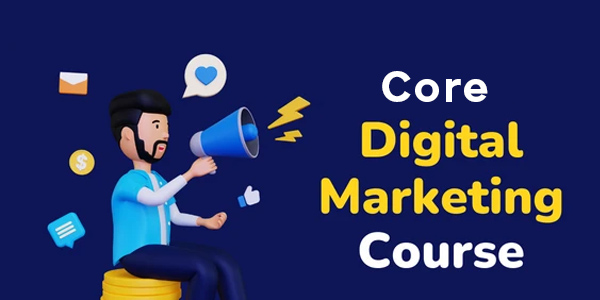
Digital Marketing is the key to business growth in the online world. At Insta InfoTech®, our Core Digital Marketing Course is designed to help students and professionals master the latest marketing strategies, tools, and techniques to drive traffic, engagement, and conversions.


Core Digital Marketing
Core Digital Marketing Course – Master the Art of Online Marketing

In today’s fast-paced digital world, businesses thrive on effective online marketing strategies. At Insta InfoTech®, our Core Digital Marketing Course provides hands-on expertise in key areas: SEO, PPC, Social Media Marketing, Content Marketing, Email Marketing, Affiliate Marketing, Google Analytics, and E-commerce. This program is ideal for beginners and professionals, giving you the practical skills to drive brand presence, attract customers, and boost revenue.

Why Learn Digital Marketing?

Digital marketing is a high-demand skill crucial for all businesses. Whether you aim to become a digital marketer, launch your own business, or enhance your brand’s reach, this course offers the practical tools and techniques to achieve your goals.

What You Will Learn:
1. Search Engine Optimization (SEO) – Rank Higher on Google
  • Master Google’s algorithm, ranking factors, and keyword research
  • Optimize on-page elements: titles, meta descriptions, content, internal links
  • Build authority with off-page strategies: link building, guest posting, brand mentions
  • Handle technical SEO: site speed, mobile-friendliness, schema markup
  • Dominate local search: Google My Business, local citations, online reviews
2. Search Engine Marketing (SEM) – Paid Advertising Mastery
  • Run effective campaigns with Google Ads: Search, Display, Video, and Shopping
  • Manage PPC advertising: keyword bidding, ad copywriting, quality score
  • Create high-converting landing pages
  • Implement remarketing and retargeting strategies
  • Use A/B testing and performance tracking to optimize ROI
3. Social Media Marketing (SMM) – Build Your Brand Presence
  • Market on Facebook, Instagram, LinkedIn, Twitter, and Pinterest
  • Develop engaging content for social media platforms
  • Run targeted social media ads: Facebook and Instagram Ads
  • Collaborate with influencers and build online communities
  • Analyze social media performance and track key metrics
4. Content Marketing – The Power of Engaging Content
  • Create SEO-friendly blog posts and articles
  • Grow your audience with video marketing on YouTube and Instagram Reels
  • Write persuasive copy for ads, websites, and sales pages
  • Build customer loyalty with email marketing and newsletters
  • Use storytelling to strengthen brand positioning
5. Email Marketing – Connect & Convert Customers
  • Implement strategies for building email lists and generating leads
  • Set up email automation and personalized drip campaigns
  • Craft high-converting email copy that drives action
  • Analyze and improve open rates and click-through rates (CTR)
6. Affiliate Marketing – Earn Passive Income
  • Learn the fundamentals of affiliate marketing
  • Select profitable affiliate programs and products
  • Promote affiliate offers through blogs, social media, and email
  • Track affiliate campaigns and optimize for better performance
7. Google Analytics & Performance Tracking
  • Set up Google Analytics and Google Search Console
  • Understand key metrics: bounce rate, session duration, CTR
  • Monitor website traffic, user behavior, and conversion goals
  • Create data-driven strategies to improve marketing efforts
8. Conversion Rate Optimization (CRO) – Maximize Conversions
  • Analyze user experience (UX) and the customer journey
  • Perform A/B tests on landing pages, ads, and CTAs
  • Use heatmaps and click tracking to understand user behavior
  • Enhance website design and calls-to-action (CTA) for better results
9. E-commerce & Dropshipping Marketing
  • Set up and manage online stores with Shopify or WooCommerce
  • Optimize product pages for SEO and conversions
  • Run effective Google and Facebook Ads for e-commerce
  • Implement customer retention and upselling strategies

Module 1: Introduction to SEO
  • What is SEO?
  • Importance of SEO for Businesses
  • How Search Engines Work
  • SEO vs SEM (Search Engine Marketing)
  • White Hat vs Black Hat SEO
Module 2: Keyword Research
  • Importance of Keywords in SEO
  • Types of Keywords (Short-tail, Long-tail, LSI, etc.)
  • Keyword Research Tools (Google Keyword Planner, Ahrefs, SEMrush, etc.)
  • Competitor Keyword Analysis
  • Keyword Optimization Strategies
Module 3: On-Page SEO
  • Title Tags and Meta Descriptions
  • Header Tags (H1, H6, H3, etc.)
  • URL Structure Optimization
  • Image Optimization (Alt Tags, Compression, Formats)
  • Internal Linking Strategies
  • Content Optimization (SEO-Friendly Content Writing)
  • Use of LSI Keywords
Module 4: Off-Page SEO
  • Introduction to Off-Page SEO
  • Backlink Building Strategies
  • Guest Blogging and Outreach
  • Social Media Signals and SEO
  • Forum and Blog Commenting
  • Influencer Outreach for Link Building
Module 5: Technical SEO
  • Website Speed Optimization
  • Mobile Optimization (Responsive Design, AMP)
  • Structured Data and Schema Markup
  • XML Sitemaps and Robots.txt
  • Canonical Tags and Duplicate Content Issues
  • Fixing Broken Links and Redirects
Module 6: Local SEO
  • Google My Business Optimization
  • NAP (Name, Address, Phone) Consistency
  • Local Citations and Listings
  • Customer Reviews and Ratings
  • Local SEO Ranking Factors
Module 7: SEO Analytics and Performance Tracking
  • Google Analytics for SEO
  • Google Search Console and Webmaster Tools
  • Tracking Keyword Rankings
  • SEO Reporting and Performance Metrics
  • Identifying and Fixing SEO Issues
Module 8: Advanced SEO Strategies
  • Voice Search Optimization
  • Video SEO (YouTube Optimization)
  • AI and Machine Learning in SEO
  • E-commerce SEO Best Practices
  • SEO for Multi-Language and International Websites
Module 9: SEO Tools and Automation
  • SEO Audit Tools (SEMrush, Ahrefs, Moz, Screaming Frog)
  • Competitor Analysis Tools
  • Rank Tracking Tools
  • SEO Automation Tools
Module 10: SEO Case Studies and Future Trends
  • Successful SEO Case Studies
  • Google Algorithm Updates
  • Future of SEO
  • Ethical SEO Practices
Module 11: Exam Preparation and Certification
  • SEO Certification Exam Overview
  • Mock Tests and Practice Questions
  • SEO Portfolio and Career Opportunities
  • Final Review and Q&A

Module 1: Introduction to Search Engine Marketing (SEM)
  • What is SEM and PPC?
  • Difference Between SEO and PPC
  • Benefits of Paid Search Advertising
  • Overview of Major PPC Platforms (Google Ads, Bing Ads, etc.)
Module 2: Understanding Google Ads
  • Google Ads Account Structure
  • Google Ads Auction and Ad Rank
  • Types of Google Ads Campaigns
  • Setting Up Your First Google Ads Campaign
Module 3: Google Search Ads
  • Introduction to Search Ads
  • Keyword Research and Match Types
  • Writing Effective Ad Copy
  • Ad Extensions and Their Importance
Module 4: Google Display Ads
  • Introduction to Display Advertising
  • Targeting Options (Demographics, Interests, Placements)
  • Creating Engaging Banner Ads
  • Best Practices for Display Advertising
Module 5: Google Video Ads (YouTube Advertising)
  • Overview of YouTube Ads
  • Types of Video Ads (In-stream, Bumper, Discovery)
  • Targeting and Placement Strategies
  • Creating a Video Ad Campaign
Module 6: Google Shopping Ads
  • Introduction to Google Shopping
  • Setting Up Google Merchant Center
  • Product Feed Optimization
  • Bidding Strategies for Shopping Ads
Module 7: Bing Ads and Other PPC Platforms
  • Introduction to Microsoft (Bing) Ads
  • Differences Between Google Ads and Bing Ads
  • Setting Up a Bing Ads Campaign
  • Other PPC Platforms (Facebook Ads, LinkedIn Ads, etc.)
Module 8: Keyword Research and Bidding Strategies
  • Keyword Research Tools (Google Keyword Planner, Ubersuggest)
  • Understanding Keyword Match Types
  • Bid Strategies (Manual CPC, Enhanced CPC, Maximize Clicks, etc.)
  • Negative Keywords and Their Importance
Module 9: Ad Performance Tracking and Optimization
  • Google Ads Metrics (CTR, CPC, Quality Score)
  • A/B Testing for Ads
  • Conversion Tracking Setup
  • Optimizing Ads for Better Performance
Module 10: Advanced PPC Strategies
  • Remarketing Campaigns
  • Landing Page Optimization
  • Google Ads Automation and Scripts
  • Scaling PPC Campaigns
Module 11: PPC Budgeting and ROI Analysis
  • Setting and Managing a PPC Budget
  • Calculating Return on Ad Spend (ROAS)
  • Cost-Per-Lead (CPL) and Customer Acquisition Cost (CAC)
  • Using Google Analytics for PPC Insights
Module 12: Exam Preparation and Certification
  • Google Ads Certification Overview
  • Practice Tests and Mock Exams
  • Final Review and Strategy
  • Google Ads Certification Exam Tips

Module 1: Introduction to Social Media Marketing
  • What is Social Media Marketing?
  • Importance of Social Media in Digital Marketing
  • Understanding Audience Behavior
  • Key Social Media Platforms Overview
Module 2: Facebook Marketing
  • Creating and Optimizing a Facebook Business Page
  • Facebook Algorithm and Engagement Strategies
  • Facebook Groups and Communities
  • Facebook Ads: Campaign Creation and Targeting
  • Analyzing Facebook Insights and Performance
Module 3: Instagram Marketing
  • Optimizing Instagram Business Profile
  • Content Strategy: Posts, Stories, Reels, and IGTV
  • Instagram Growth Strategies (Hashtags, Engagement)
  • Instagram Ads: Targeting and Retargeting
  • Measuring Success with Instagram Insights
Module 4: LinkedIn Marketing
  • Building a Professional LinkedIn Profile
  • Company Pages and LinkedIn Groups
  • LinkedIn Content Strategy (Articles, Posts, Videos)
  • LinkedIn Ads: Campaign Manager and Targeting
  • Networking and Lead Generation on LinkedIn
Module 5: Twitter Marketing
  • Twitter Business Account Setup
  • Content Planning: Tweets, Threads, Polls, and Spaces
  • Using Twitter Hashtags and Trends
  • Twitter Ads: Promoted Tweets and Followers
  • Analyzing Twitter Analytics and Performance
Module 6: TikTok Marketing
  • Understanding TikTok's Algorithm
  • Creating Engaging Short-Form Videos
  • Collaborations and Influencer Marketing on TikTok
  • TikTok Ads: In-Feed Ads, Branded Hashtag Challenges
  • Tracking Performance with TikTok Analytics
Module 7: Social Media Advertising
  • Introduction to Paid Social Media Campaigns
  • Facebook and Instagram Ads Manager
  • LinkedIn Ads, Twitter Ads, and TikTok Ads
  • Creating Ad Copy and Visuals
  • Budgeting and A/B Testing for Ads
Module 8: Content Creation and Community Management
  • Developing a Social Media Content Calendar
  • Creating Engaging Visuals and Videos
  • Using Canva and Other Content Creation Tools
  • Building and Managing Online Communities
  • Responding to Comments and Handling Customer Queries
Module 9: Social Media Analytics and Reporting
  • Tracking Key Social Media Metrics
  • Google Analytics and UTM Tracking
  • Creating Performance Reports
  • Improving Strategies Based on Data Insights
Module 10: Social Media Trends and Future Strategies
  • Emerging Social Media Trends
  • Influencer Marketing and Brand Collaborations
  • AI and Automation in Social Media Marketing
  • Developing a Long-Term Social Media Strategy
Module 11: Social Media Marketing Certification and Case Studies
  • Overview of Social Media Certifications
  • Case Studies of Successful Social Media Campaigns
  • Best Practices for Career Growth in SMM
  • Final Project and Certification Exam Preparation

Module 1: Introduction to Content Marketing
  • What is Content Marketing?
  • Importance of Content Marketing
  • Types of Content Marketing
  • Understanding Your Target Audience
Module 2: Blogging and Article Writing
  • Choosing a Blog Niche
  • Keyword Research and SEO for Blogs
  • Writing Engaging and Valuable Blog Posts
  • Content Structure and Formatting
  • Guest Blogging and Content Collaboration
Module 3: Copywriting Techniques
  • Understanding Copywriting
  • Writing Headlines That Convert
  • Persuasive Writing Techniques
  • Storytelling in Content Marketing
  • Call-to-Action (CTA) Strategies
Module 4: Video Marketing (YouTube, TikTok, Reels)
  • Why Video Marketing is Essential
  • Creating Engaging Video Content
  • Optimizing Videos for YouTube SEO
  • Short-Form Content Strategies (TikTok, Instagram Reels)
  • Live Streaming and Audience Engagement
Module 5: Social Media Content Strategy
  • Creating a Social Media Content Plan
  • Best Platforms for Content Marketing
  • Engagement and Community Building
  • Hashtag Strategies and Trends
  • Analyzing Social Media Performance
Module 6: Email Marketing
  • Introduction to Email Marketing
  • Building an Email List
  • Crafting High-Performing Email Campaigns
  • Email Automation and Personalization
  • A/B Testing and Email Performance Analysis
Module 7: Content Distribution and Promotion
  • Best Channels for Content Distribution
  • Paid vs Organic Content Promotion
  • Using Influencers and Collaborations
  • Repurposing Content Across Platforms
Module 8: Content Analytics and Performance Tracking
  • Understanding Content Metrics
  • Google Analytics for Content Marketing
  • Social Media and Email Performance Tracking
  • Improving Strategy Based on Data
Module 9: Advanced Content Marketing Strategies
  • Content Funnels and Customer Journey
  • Growth Hacking with Content
  • Content Monetization Strategies
  • AI and Automation in Content Marketing
Module 10: Final Project and Certification
  • Developing a Full Content Marketing Strategy
  • Case Studies and Best Practices
  • Project Presentation
  • Course Recap and Certification

Module 1: Introduction to Email Marketing
  • What is Email Marketing?
  • Importance and Benefits of Email Marketing
  • Email Marketing vs. Other Digital Channels
  • Email Marketing Terminologies
Module 2: Understanding Email Lists
  • Types of Email Lists
  • Building an Email List from Scratch
  • Lead Magnets and Incentives
  • Segmentation and Targeting
Module 3: Email Marketing Tools and Platforms
  • Overview of Email Marketing Tools
  • Mailchimp, HubSpot, and Constant Contact
  • Setting Up an Email Marketing Account
  • Integrations with CRM and Automation Tools
Module 4: Designing Effective Email Campaigns
  • Elements of a Successful Email
  • Creating Engaging Subject Lines
  • Email Copywriting Best Practices
  • Using Images, GIFs, and Videos
Module 5: Email Automation and Workflows
  • Introduction to Email Automation
  • Setting Up Welcome Emails
  • Drip Campaigns and Nurture Sequences
  • Behavioral Trigger Emails
Module 6: Personalization and Segmentation
  • Importance of Email Personalization
  • Dynamic Content and Smart Personalization
  • Segmenting Based on User Behavior
  • Case Studies on Personalized Email Campaigns
Module 7: A/B Testing and Optimization
  • What is A/B Testing?
  • Testing Subject Lines, Content, and CTAs
  • Analyzing Results and Implementing Changes
  • Best Practices for Continuous Improvement
Module 8: Email Deliverability and Compliance
  • Understanding Email Deliverability
  • How to Avoid Spam Filters
  • GDPR and CAN-SPAM Compliance
  • Best Practices for Email Security
Module 9: Email Analytics and Performance Tracking
  • Key Email Marketing Metrics
  • Tracking Open Rates, CTR, and Conversions
  • Analyzing Bounce Rates and Unsubscribes
  • Using Google Analytics for Email Performance
Module 10: Advanced Strategies and Case Studies
  • Re-engagement Campaigns
  • Behavior-Based Email Targeting
  • Using AI and Predictive Analysis in Emails
  • Successful Email Marketing Campaign Case Studies
Module 11: Final Project and Certification
  • Creating a Full Email Marketing Strategy
  • Running a Test Campaign
  • Reviewing Performance and Insights
  • Final Exam and Certification

Module 1: Introduction to Affiliate Marketing
  • What is Affiliate Marketing?
  • How Affiliate Marketing Works
  • Key Players in Affiliate Marketing
  • Benefits of Affiliate Marketing
  • Common Affiliate Marketing Terms
Module 2: Finding a Niche and Choosing Affiliate Programs
  • Identifying Profitable Niches
  • Researching Market Demand
  • Choosing the Right Affiliate Programs
  • Understanding Commission Structures
Module 3: Setting Up Your Affiliate Website
  • Choosing a Domain and Hosting
  • Setting Up a WordPress Site
  • Installing Essential Plugins
  • Creating a Professional Website Design
Module 4: Content Creation for Affiliate Marketing
  • Writing High-Converting Blog Posts
  • Creating Product Reviews and Comparisons
  • Using SEO to Rank Content
  • Leveraging Video and Social Media Content
Module 5: Traffic Generation Strategies
  • Search Engine Optimization (SEO) Basics
  • Paid Advertising (Google Ads, Facebook Ads)
  • Social Media Marketing
  • Email Marketing for Affiliates
Module 6: Tracking and Optimizing Campaigns
  • Understanding Affiliate Tracking Links
  • Using Google Analytics for Performance Tracking
  • Split Testing and Conversion Optimization
  • Improving Click-Through and Conversion Rates
Module 7: Affiliate Networks and Programs
  • Overview of Top Affiliate Networks
  • Amazon Associates Program
  • ClickBank and Digital Products
  • CPA (Cost Per Action) Marketing
Module 8: Legal and Ethical Considerations
  • Affiliate Marketing Disclosure Guidelines
  • GDPR and Data Privacy Considerations
  • Ethical Marketing Practices
  • Avoiding Scams and Fraud
Module 9: Scaling Your Affiliate Business
  • Building an Email List
  • Outsourcing Content and Marketing Tasks
  • Creating Your Own Affiliate Program
  • Advanced Automation Strategies
Module 10: Case Studies and Success Stories
  • Real-Life Affiliate Marketing Success Stories
  • Analyzing What Works and What Doesn’t
  • Learning from Industry Leaders
Module 11: Exam Preparation and Certification
  • Affiliate Marketing Exam Overview
  • Practice Tests and Mock Exams
  • Final Review and Q&A

Module 1: Introduction to Influencer Marketing
  • What is Influencer Marketing?
  • The Rise of Influencers in Digital Marketing
  • Types of Influencers (Mega, Macro, Micro, Nano)
  • Benefits and Challenges of Influencer Marketing
Module 2: Identifying the Right Influencers
  • Understanding Your Target Audience
  • Researching and Selecting Influencers
  • Evaluating Influencer Credibility and Engagement
  • Using Influencer Marketing Platforms
Module 3: Influencer Marketing Strategies
  • Types of Influencer Collaborations (Sponsored Posts, Giveaways, Reviews)
  • Choosing the Right Social Media Platforms
  • Organic vs. Paid Influencer Campaigns
  • Storytelling and Content Strategies
Module 4: Campaign Planning and Execution
  • Setting Campaign Goals and Objectives
  • Developing a Campaign Brief
  • Negotiating with Influencers
  • Legal Considerations and Disclosure Guidelines
Module 5: Content Creation and Collaboration
  • Creating Authentic and Engaging Content
  • Aligning Brand Messaging with Influencers
  • Repurposing Influencer Content for Multiple Channels
  • Managing Content Approval and Revisions
Module 6: Measuring Campaign Performance
  • Key Performance Indicators (KPIs) in Influencer Marketing
  • Tracking Engagement, Reach, and Conversions
  • Analyzing Influencer Performance
  • Tools for Tracking and Reporting
Module 7: Return on Investment (ROI) in Influencer Marketing
  • Understanding ROI Metrics
  • Calculating Cost-Per-Engagement (CPE) and Cost-Per-Click (CPC)
  • Assessing Brand Awareness and Sales Impact
  • Optimizing Future Campaigns Based on Data
Module 8: Influencer Relationship Management
  • Building Long-Term Partnerships with Influencers
  • Maintaining Transparent Communication
  • Handling Influencer Crisis and Reputation Management
  • Leveraging Influencer Networks for Expansion
Module 9: Trends and Future of Influencer Marketing
  • Emerging Trends in Influencer Marketing
  • The Role of AI and Automation
  • Influencer Marketing in the Metaverse
  • Predictions for the Future of Digital Influence
Module 10: Case Studies and Best Practices
  • Successful Influencer Marketing Campaigns
  • Lessons from Failed Campaigns
  • Ethical Considerations in Influencer Marketing
  • Final Project: Designing a Complete Influencer Marketing Strategy

Send Me Message

Trust & Validation

UGC-Recognized Skilled Qualifications for the Modern Global Workforce

University Certification

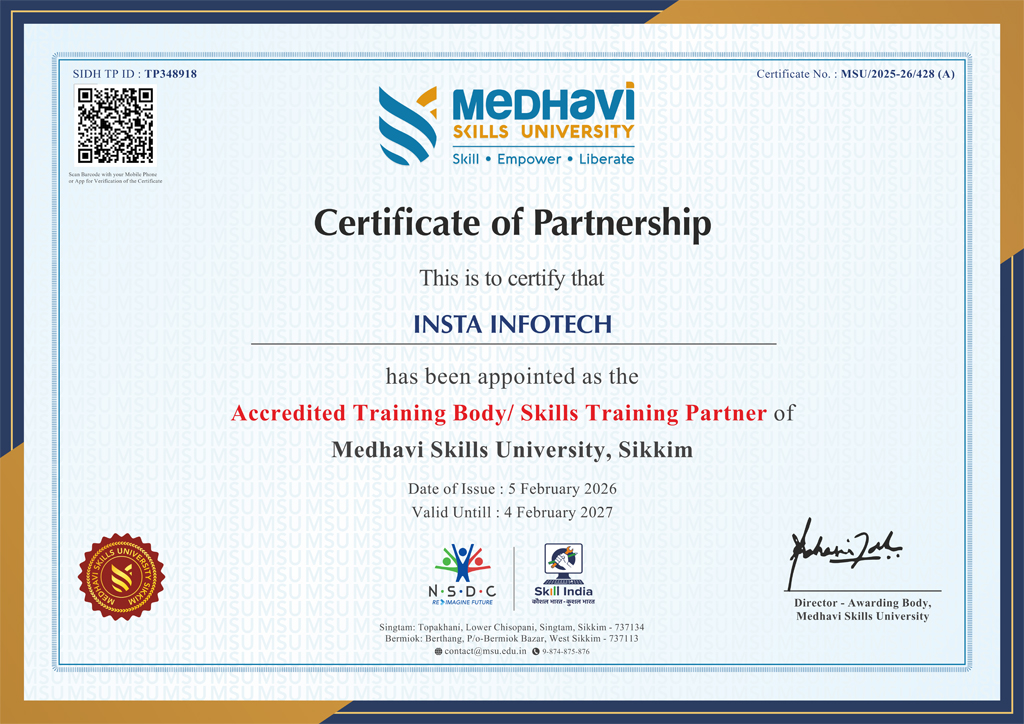
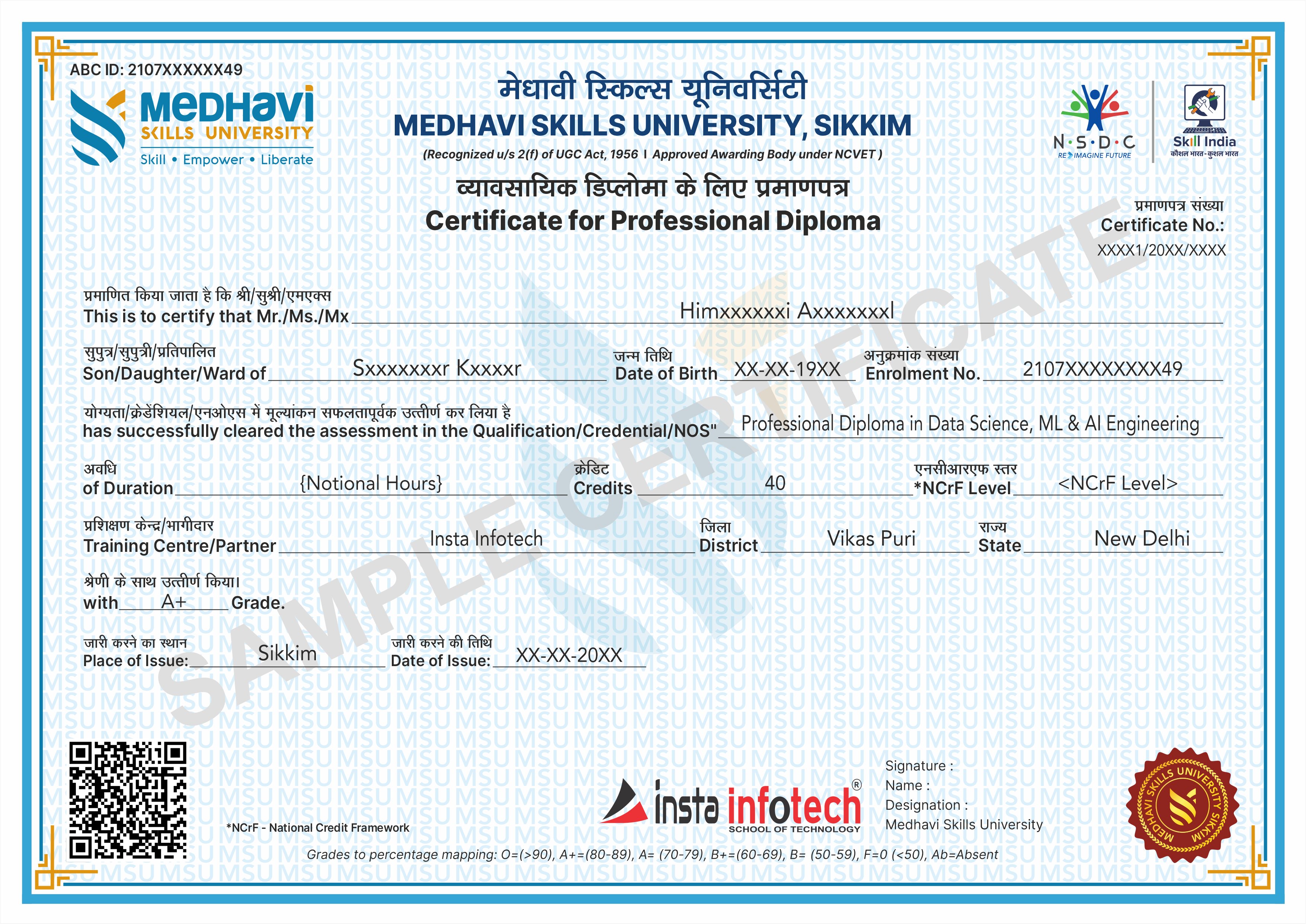
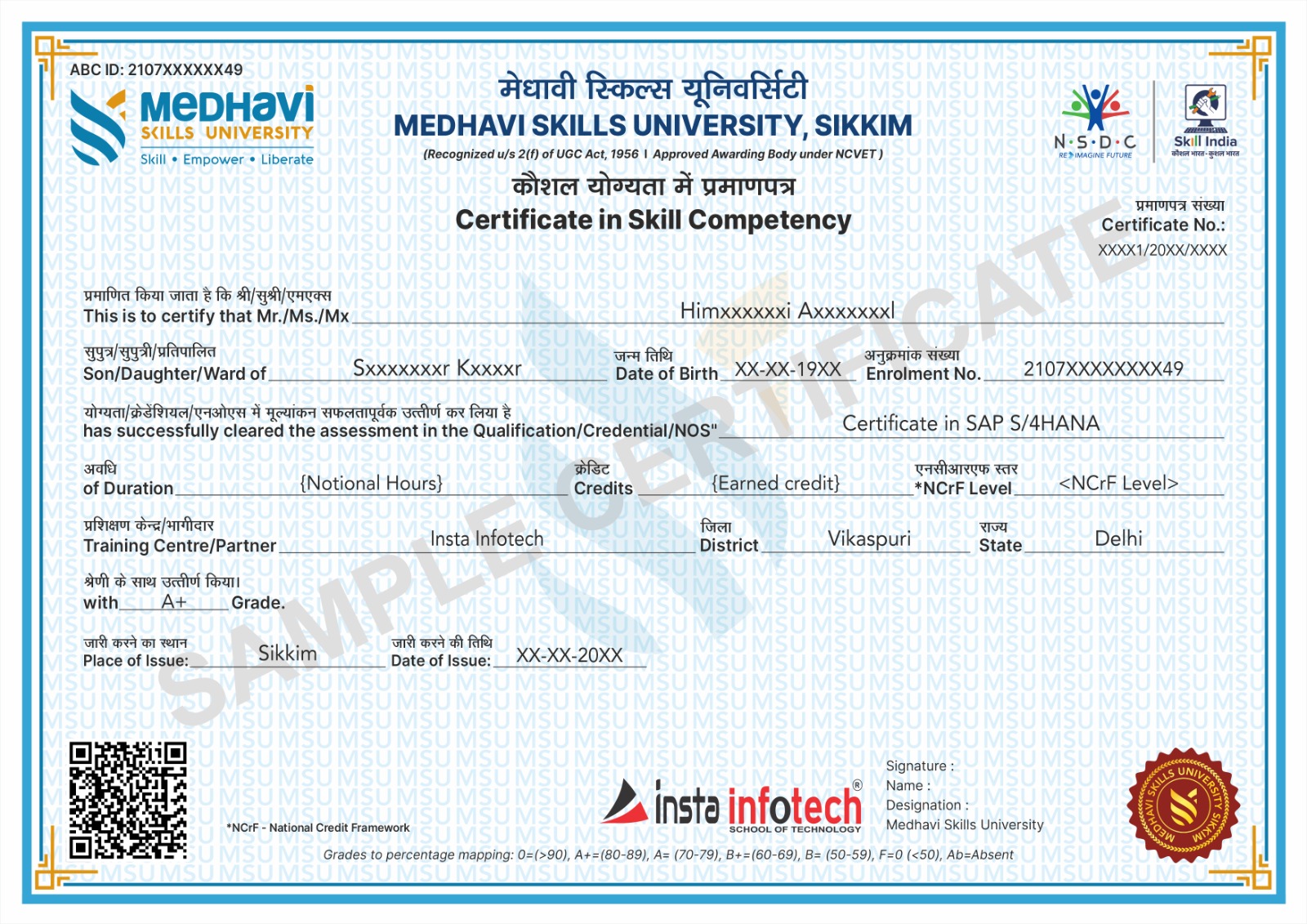
Earn industry-relevant Certificates and Diplomas awarded by Medhavi Skills University, a UGC-recognized University. Insta Infotech is Approved Training Partner of Medhavi Skills University, ensuring quality education and credible certification.


Certificate Verification

All Certificates and Diplomas are digitally verifiable through Government of India platforms, including Skill India Digital Hub (MSDE), ABC.gov.in (Ministry of Education), and DigiLocker, ensuring authenticity and nationwide recognition.

Credit-Based Course (NCrF)

Our courses are aligned with the National Credit Framework (NCrF) under the National Education Policy (NEP) 2020. Learners earn academic credits that strengthen their skill-based education profile and can be seamlessly transferred toward higher education pathways.

Global Recognition
Global Recognition

NCrF-aligned skill credits are recognized across the UK, EU, and Australian education systems. Through MSU’s global partnerships, learners benefit from dual certification opportunities and accelerated pathways to international degree programs.

Skill India Mission
Skill India Mission

Insta Infotech empowers learners with future-ready skills. Backed by the Skill India Mission and our academic partnership with Medhavi Skills University, we bridge the gap between education and employment through practical, hands-on learning and nationally recognized certifications.

Placement Support
Placement Support

Quality Skill Education — this is not merely a certificate of attendance, but a verified academic credential that enhances credibility and opens opportunities across MNCs, embassies, and government sectors.

Specializations

Skilled, Qualification, Certification

Course Credibility

Course Credibility

Our programs are certified by a recognized university, ensuring legal authenticity, academic validity, and strong professional acceptance. This means your qualification carries real value for employment, career advancement, and higher education.

Employability

Employability

Our programs combine practical training, real-world projects, and industry-relevant skills to prepare students for immediate employment. we ensure learners confidently transition from education to professional careers.

Global Standards

Global Standards

Our programs follow internationally aligned curricula and current industry requirements, ensuring learners gain globally relevant knowledge, practical competencies, and professional practices. This prepares students to adapt, compete, and work confidently.

National Alignment (Skill India)

National Alignment (Skill India)

Aligned with the Skill India Mission, we transform vocational training into a nationally recognized qualification, enabling our students to become part of India’s formal skilled workforce.

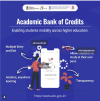
Academic Mobility (Credit-Based)

Academic Mobility (Credit-Based)

Through the National Credit Framework (NCrF), our courses are not merely extra-curricular; they are credit-earning modules that contribute directly toward your formal higher education pathway.

NEP 2020 Integration

NEP 2020 Integration

Aligned with the National Education Policy 2020, we transform traditional IT education into a multidisciplinary, skilled-based vocational pathway that enables students to earn formal academic credits.

Our Blogs

Latest Blog Updates

SEO Training Having Great Future Insta Infotech

Internet marketing is now flourishing throughout the world. The widespread use of internet has increased the market of products and services online. This has again increased the demand of online marketers.

Read More

Skillful Website with Developing Standards

If you are planning to choose a career in IT, here you find the career scope in joining Web designing course in Delhi.

Read More

Connect IT Training Peaks

Insta infotech “Software And IT Training Institute” makes an instrument to meet the twin challenges of continuous improvement in IT demand for change

Read More

Pick up High-Level Programming Language Python

Python is a High-level programming language. Python programming can be used for Data Science, Network Programming Web Development, etc. Our training covers python as object Oriented, Python as Data structure, GUI, Database connection with Python. Python is famous language as machine learning, course focus on  learning from beginning to advanced level.

Read More

Specialize in RHCSA certified Professional

Insta Infotech certified candidates with RHCSA practice course with 200+ RHEL7 real-world problem scenarios covering all the exam. An RHCSA® certification is earned when an IT professional try the core system administration skills required in Red Hat Enterprise Linux environments. To become an RHCSA certified, you need to pass the EX200 exam. Only this course has the up to date simulated tests questions, where all questions are carefully scrutinized by real Linux certified professionals.

Read More

Start Your Career As SEO Expert

Search Engine Optimization is one of the essential method you can make use of, attaining more higher rankings but also for running effective Search Engine Optimization campaigns.Today building a career in website development standards is the prime focus on all SEO methods, and also if it's not appropriately implemented. Professional and practical SEO courses in Delhi works on Live Projects that can provide you long-term gains in a shorter period.

Read More

Transform Your Career with Insta InfoTech - Premier IT Training Institute

Join Insta InfoTech for cutting-edge IT training programs designed to boost your skills and career prospects. Offering expert-led Courses in Software Development, Data Science, Cybersecurity, and more.

00+

Trained Students

00+

Years of Experience

00+

Countries Represented

00x7

Support

Insta Infotech

What We Offer

At Insta Infotech, we specialize in a wide array of courses across domains like:

Programming Languages: Java, Python, C++, .NET, and more. Data Science & Analytics: Machine Learning, AI, Big Data. Cloud Computing & DevOps: AWS, Azure, Docker, Kubernetes. Cybersecurity: Ethical Hacking, Network Security. Digital Marketing: SEO, Social Media, Content Marketing. Database Management: SQL, PL/SQL, MongoDB, Oracle.
Enquire Now
Our learners work at