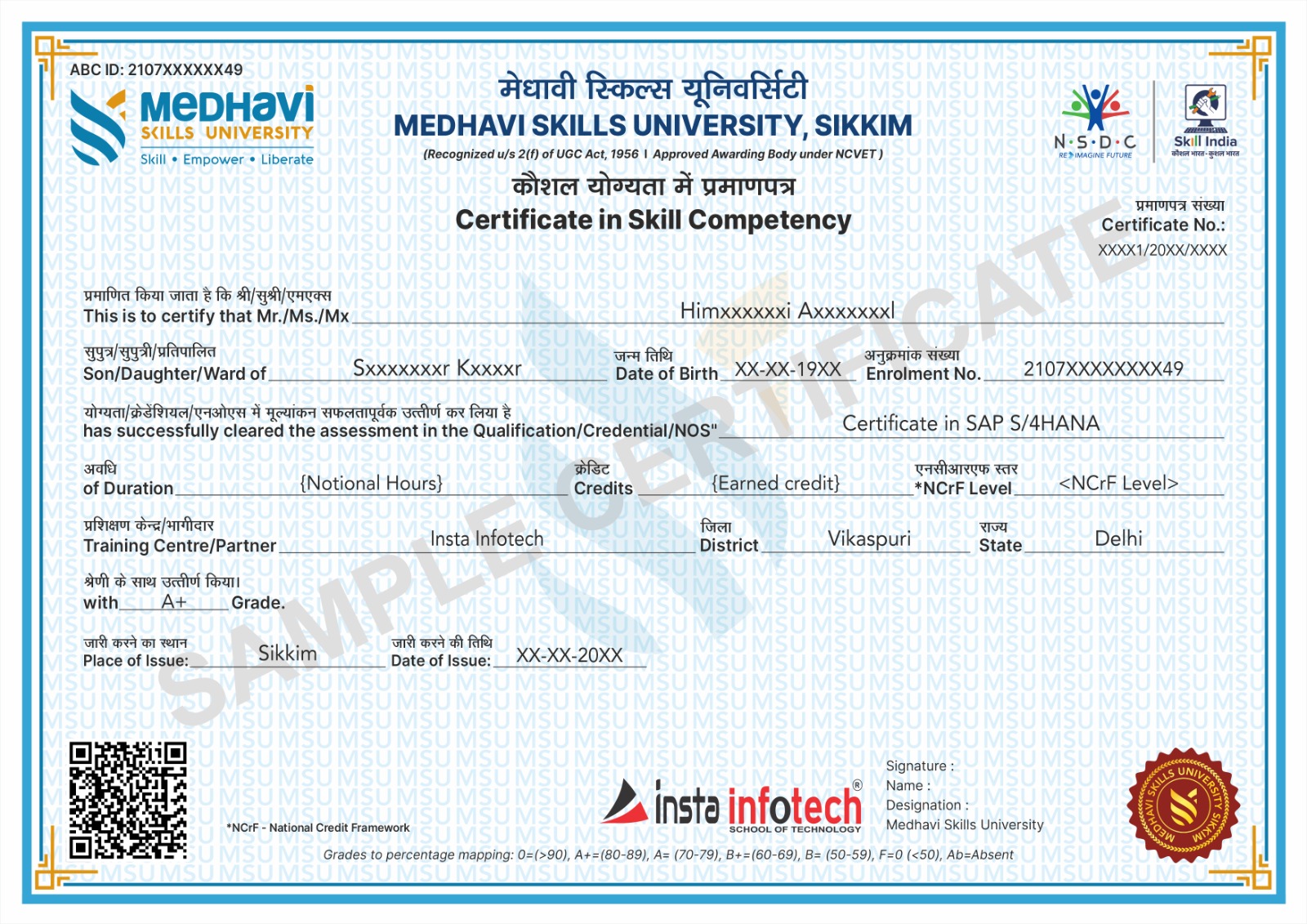
Learning journey
A clearer learning flow.
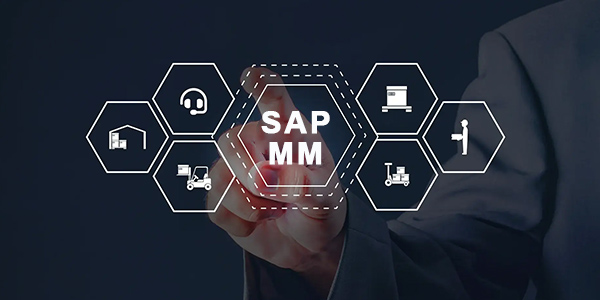
The progression begins with SAP architecture, S/4HANA navigation, and MM enterprise structure setup, moves through master data configuration and the full Procure-to-Pay cycle, advances into inventory management, valuation, account determination, and consumption-based planning, then covers warehouse management basics and MM-FI/SD/PP integration, and finishes with SAP Fiori for MM, reporting, C_TS452 exam preparation, and a capstone end-to-end supply chain scenario project. [web:545]
Step 01
SAP MM Enterprise Structure & Organisational Setup
SAP architecture and S/4HANA overview; MM module landscape and integration map; enterprise structure configuration — client, company code, plant, storage location, purchasing organisation, and purchasing group; assignment of organisational units; plant parameters; and SAP Fiori launchpad orientation for MM transactions. [web:557]
Step 02
Master Data — Material Master & Vendor Master
Material master — material types, industry sectors, views (Basic Data, Purchasing, MRP, Accounting, Storage), material groups, and units of measure; vendor master — general data, company code data, and purchasing data; purchasing info records; source lists and quota arrangements; and outline agreements — contracts and scheduling agreements. [web:551]
Step 03
Procure-to-Pay Cycle & Logistics Invoice Verification
Purchase requisition creation and release strategy; RFQ and quotation comparison; purchase order types — standard, subcontracting, consignment, and stock transfer; goods receipt with movement type 101; GR/IR clearing account; logistics invoice verification (MIRO) — three-way match; invoice blocking, tolerance checks, and ERS (evaluated receipt settlement). [web:554]
Step 04
Inventory Management, Valuation & CBP/MRP
Goods movements — movement types 101, 122, 201, 301, 311, 601; stock types — unrestricted, quality inspection, and blocked; physical inventory and cycle counting; valuation procedures — moving average price (MAP) and standard price; account determination with OBYC; consumption-based planning (CBP) — reorder point planning, time-phased planning, and MRP basics. [web:554]
Step 05
MM Integration, Reporting & C_TS452 Capstone
MM-FI integration — automatic account determination posting flows; MM-SD integration — stock transport orders; MM-PP integration — planned orders and production supply; warehouse management basics; SAP MM standard reports — MB52, MB51, ME2M, ME80FN; SAP Fiori MM apps; C_TS452 SAP S/4HANA Sourcing and Procurement exam preparation; and a full end-to-end supply chain capstone project. [web:547]